Biker (2026): Sharwanand Anchors Motocross Drama With Uneven Emotional Horsepower


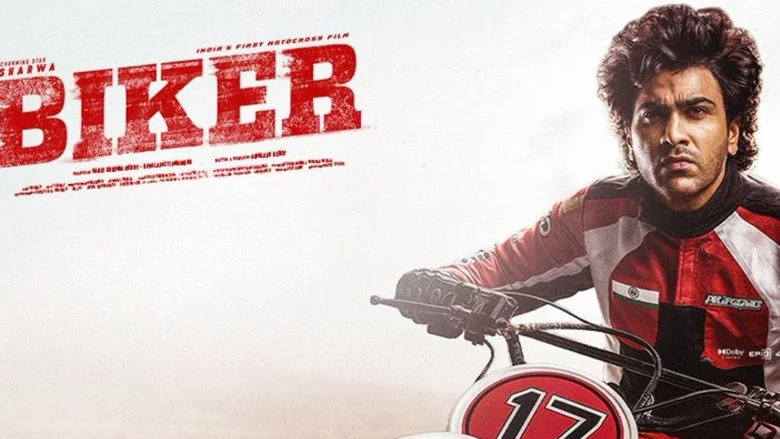
A man straddles two worlds, the roar of engines and the quiet demands of fatherhood, as racing sequences in the opening act thrust us into the adrenaline-soaked world of competitive motocross. Abhilash Reddy Kankara’s sports drama promises grit and family conflict in equal measure, but the second half loses momentum where it should accelerate hardest.
Sharwanand’s Divided Heart Anchors the Machinery
Sharwanand plays Vikas Narayan as a man caught between his peaceful present and the dangerous pull of motocross shaped by his demanding father. He shows up for family despite the bike-shaped hole in his heart, grounding the film’s central tension. The casting choice signals intent: an actor credible enough to sell both domesticity and competitive hunger without slipping into melodrama.
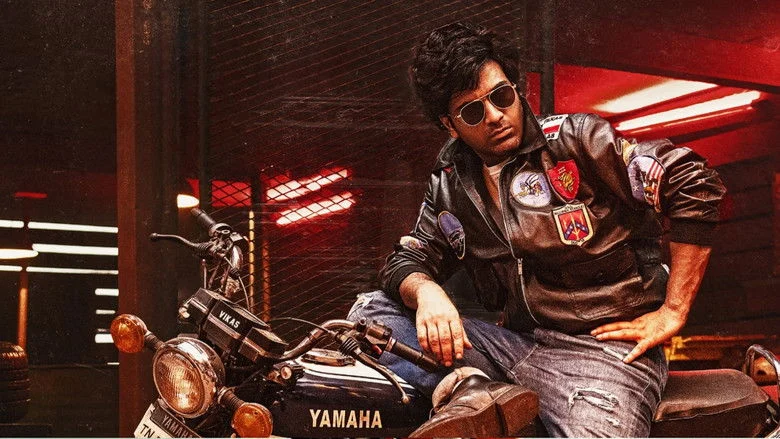
Abhilash Reddy’s Direction Delivers Adrenaline, Stumbles on Emotional Sustenance
Kankara sets his motocross drama in a space promising both adrenaline and emotion, and the opening racing sequences prove he understands how to frame speed and danger with visual clarity. The screenplay moves seamlessly between the 1990s and 2000s, weaving past into present without jarring cuts. Yet the emotional engine stalls precisely when the narrative asks viewers to feel Vikas’s internal conflict most acutely.
Racing Thrills Outpace the Sport’s Deeper Drama
The well-crafted racing sequences in the beginning immerse viewers into motocross with genuine technical credibility. Anil Pasala’s editing maintains crisp momentum through the first half, letting the sport breathe and pulse. These setpieces deliver what the film promises, visceral, tactile thrills that make you sense the danger and precision required.
The father-son dynamic anchors the emotional core, with Rajasekhar playing Sunil Narayan as a tough-as-bones figure whose demanding nature shaped Vikas’s competitive fire. This relationship carries weight in isolated moments, particularly toward the film’s end when the narrative finally commits to exploring what drives both men. Yet these beats arrive too late and lack the narrative scaffolding needed to feel inevitable rather than obligatory.
Where the genre execution falters is in the inconsistent engagement of the second half. Predictable story turns, Vikas’s ascent to greatness, family reconciliation, past resolved, unfold without surprise or earned complexity. The drama never transcends its template, settling for emotional gestures where it needed emotional architecture. A sports drama lives or dies by making us believe in both the competition and what hangs in the balance beyond victory.
For Telugu sports dramas and family-centered narratives, this film maintains enough craft and sincerity to warrant exploration. Those seeking unpredictable or narratively complex storytelling will find themselves restless by the midpoint.
Malavika Nair and Atul Kulkarni round out the ensemble, though the research offers limited detail on their specific contributions to the emotional texture of Vikas’s personal life. Their presence signals the film’s investment in a complete family portrait rather than a singular revenge or redemption arc.
Music composed by Ghibran Vaibodha supports the racing sequences and emotional peaks without overwhelming them, a restraint that serves the drama well. The UA certificate indicates family-friendly intent, and the film delivers on that promise, this is conflict resolution through grit, not through violence or betrayal.
BookMyShow audiences rated it 3.5 out of 5, reflecting appreciation for the emotional and gritty texture while acknowledging the narrative’s conventional bones. Critics were similarly split: one assessment pegged the film at 2.5/5, citing convoluted plotting and dull personality work, while another rated it 3.5/5, praising the motocross world-building. “Biker has its moments, especially in its racing sequences and the emotional father-son dynamic that lands towards the end. However, a predictable narrative, inconsistent engagement, and underwhelming drama hold it back from truly standing out, ” one publication observed. Another noted that “Abhilash Reddy sets his motocross drama in a space that promises both adrenaline and emotion, and for the most part, delivers a compelling look into the world of the sport.”
Telugu action and sports cinema thrives when it balances spectacle with stakes that feel personal rather than genre-mandated; this film achieves the former more convincingly than the latter. The racing craft is undeniable, but the human drama required to justify the length and scope never quite lands with full force. I found myself engaged by the technical precision of the motocross sequences while increasingly frustrated by narrative shortcuts in the emotional beats that should have sustained tension through two hours and forty-two minutes.
Watch this if you’re drawn to Telugu sports dramas with solid technical execution and don’t mind predictable family reconciliation arcs. Skip it if you demand narrative complexity or character surprise from your two-hour investment. The racing sequences alone may justify a single theatrical viewing, but streaming feels the more sensible format for something operating at 3.5/5 rather than transcending its genre entirely.
Biker (2026) is a competent sports drama that throttles well visually but downshifts emotionally, worth watching for its motocross craft if family conflict narratives hold appeal, earning a solid 3.5 out of 5 for execution that nearly but never quite coheres.
Telugu sports drama reviews explore similar territory where family pride and athletic ambition collide with mixed results across Telugu Drama reviews.
Ken Karunas’ ensemble work in Youth similarly wrestles with Youth review, making for instructive comparison in Telugu drama structure.
Vignesh Shivan’s approach to blending genre promise with emotional delivery mirrors the tensions explored in Love Insurance verdict across different thematic terrain.
Ankit Jaiswal is the Chief Author, covering Indian cinema and OTT releases with honest, no-filler criticism. An SEO strategist by background, he brings a research-driven approach to film writing, cutting through hype to tell you exactly what's worth your time.