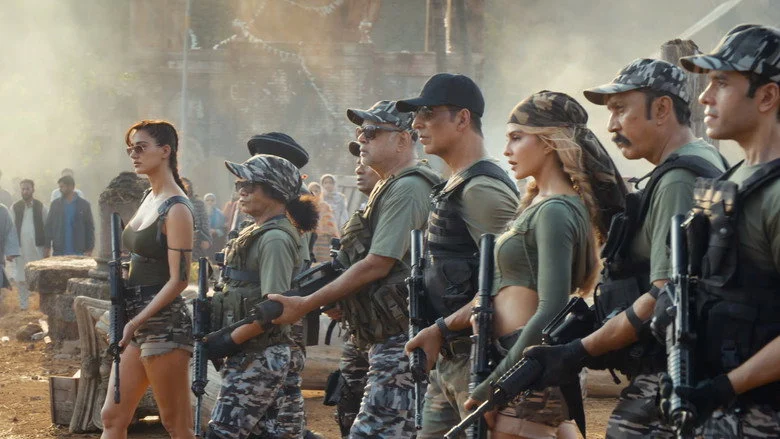
Welcome to the Jungle (2026): A Craft-First Analysis of Ahmed Khan’s Overstuffed Comedy-Action


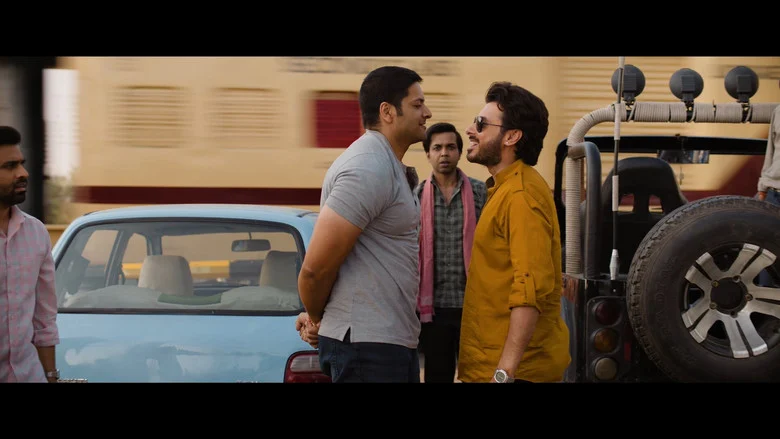
Akshay Kumar and Suniel Shetty face off in a muddy jungle clearing, fists raised, each flanked by a dozen sweating comedians who can’t decide whether to cheer or run. It’s the central gang war sequence Ahmed Khan has built his film around, and it captures everything that makes Welcome to the Jungle a visually energetic but narratively strained exercise in franchise expansion.
The Gang War Scene That Almost Justifies the Budget
That Akshay-Suniel confrontation, set against a backdrop of makeshift bamboo barricades and dangling vines, is the film’s single most accomplished piece of craft. The choreography oscillates between slapstick and genuine physicality, with Kumar landing a spinning kick that draws literal applause from the extras.
But the scene also reveals a problem: too many characters jostle for frame space. Ahmed Khan manages the chaos well enough for a single setpiece, yet the broader film never finds this same spatial discipline.
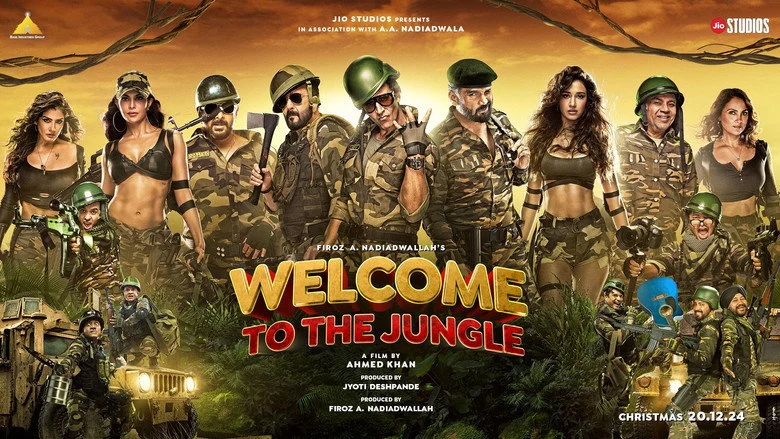
Akshay Kumar Swings Between Action Star and Comedy Anchor
In the jungle setup, Kumar plays Jay Bakshi as an extension of his Housefull register, competent with firearms, looser with one-liners. His best moment arrives mid-mission when he deadpans through a monkey encounter, letting the audience laugh with his character rather than at the situation.
The physical demands are real: he sprints through undergrowth, slides down muddy slopes, and lands a punch that actually seems to connect. Yet the script doesn’t let him dig deeper, Jay’s personal stake in the mission is dumped via exposition in the climactic reveal, robbing Kumar of a chance to fuse his comic and dramatic instincts.
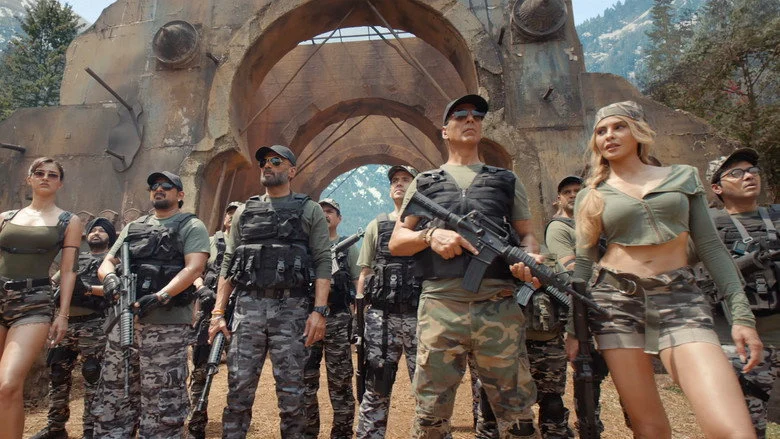
The Comedy-Action Blend Isn’t Balanced, But It Is Ambitious
Ahmed Khan’s direction leans hardest on the ensemble’s ability to generate laughter through sheer volume. The opening act introduces quirky characters, policemen, informants, a wandering sadhu, who stumble into the jungle like passengers on a deliberately overcrowded bus. Johnny Lever’s first appearance, as a lost tourist who mistakes a gibbon call for a phone ring, lands with the timing of a seasoned professional.
The action, however, struggles to coexist. Gunfights erupt mid-dialogue, and the editing in the second half grows jagged, one chase sequence cuts between three simultaneous skirmishes without establishing clear geography. The confined jungle setting should have worked as a pressure cooker for tension; instead, it feels like a location where story beats are dropped rather than discovered.
Paresh Rawal and Krushna Abhishek share a five-minute stretch involving a broken radio and a misinterpreted map that nearly redeems the film’s indulgent runtime. It’s the kind of pure situational comedy that the Welcome franchise once thrived on, before the action-adventure overlay began competing for attention.
Arshad Warsi Commands the Climax, but the Supporting Cast Suffers
Warsi, playing antagonist Raj Solanki, shifts from a whisper to a roar in the revelation scene connecting his character to Akshay Kumar’s. It’s a calculated performance that gives the third act an emotional anchor the first two hours lacked. His motivation, revenge stitched into family history, is simple, but Warsi sells it with bloodshot eyes and a stillness that contrasts the surrounding chaos.
Suniel Shetty matches Kumar’s energy beat for beat in their showdown, yet his subplot as Sandhya remains frustratingly thin. Raveena Tandon and Lara Dutta appear in precisely two scenes each, delivering comic lines that feel written for a different draft. Jacqueline Fernandez and Disha Patani are reduced to reaction shots during the jungle traversal, a waste of performers who’ve shown sharper comic instincts elsewhere.
Jackace.in’s November 2025 report pegged the production budget at ₹120 crore, with prints and publicity adding ₹30 crore. That figure suggests an intent to deliver spectacle at scale, but the finished film spreads its resources across too many faces, leaving even senior cast members under-served.
Audience Reception Points to a Franchise That’s Outgrown Its Script
Early audience feedback, while not yet aggregated into formal scores, flags two consistent complaints: plot confusion around Solanki’s connection to Jay, and a second half that drags through repetitive jungle navigation. The comedy does land for family audiences, particularly during Rajpal Yadav’s extended cameo as a forest ranger who loses his glasses, but viewers seeking coherent storytelling will find themselves checking the runtime.
The film’s postponement from December 2025 to June 2026 generated industry chatter about possible re-shoots or post-production fixes. Given the uneven pacing in the current cut, one wonders what was changed, and whether the editing room prioritised trimming the ensemble over tightening the core narrative.
For those seeking more analysis of where this film stands in the larger landscape of Hindi-language genre cinema, browse our collection of Hindi Action reviews to track how the industry’s biggest franchises evolve, or stall.
Welcome to the Jungle has the parts of a crowd-pleaser, a committed lead, a villain with one genuinely good scene, and enough comic talent to fill a small stadium. But without better plot architecture, the craft only carries it so far. Watch it for the Akshay-Suniel face-off, or skip it and wait for the inevitable tighter OTT cut.
The film is a 2.5-out-of-5 franchise entry, competent in its setpieces, frustrating in its screenplay, and proof that even a jungle full of stars can’t compensate for a story that got lost along the way.
For a stronger example of how comedies can balance ensemble chaos with emotional stakes, read our review of Main Vaapas review.
Those interested in how star power interacts with confused plotting might also compare this with Cocktail 2 verdict.
Ankit Jaiswal is the Chief Author, covering Indian cinema and OTT releases with honest, no-filler criticism. An SEO strategist by background, he brings a research-driven approach to film writing, cutting through hype to tell you exactly what's worth your time.