Gaayapadda Simham (2026): A Satirical Trip to the American Dream That Loses Its Way


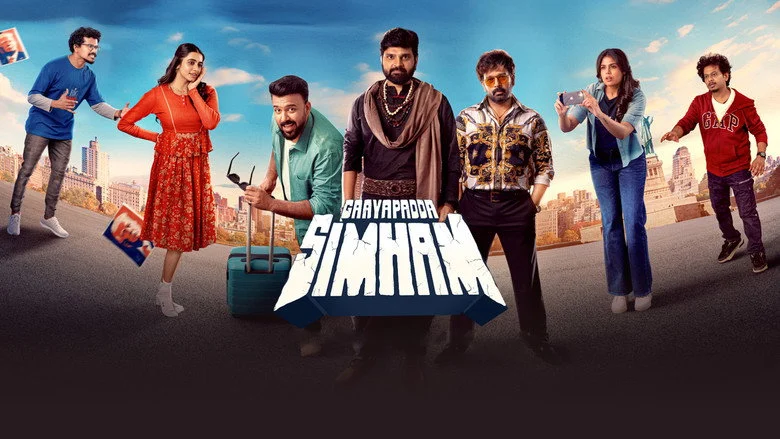
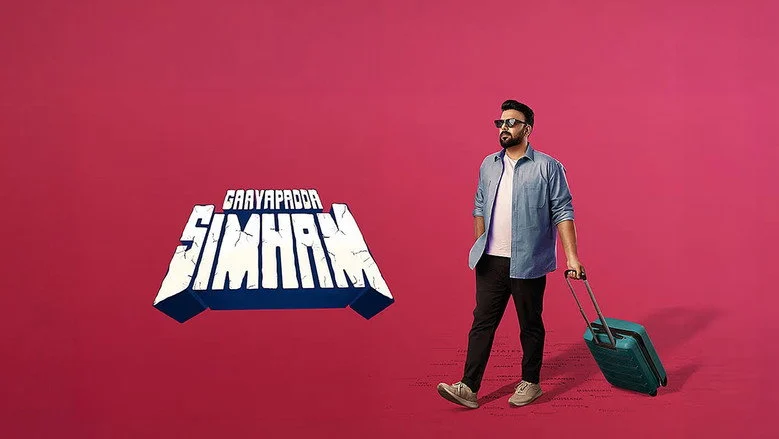
Dharahas (Tharun Bhascker) packs his bags for the United States, and the trailer frames his excitement with the kind of comic buoyancy that suggests a breezy ride. Then the ground shifts, and the film trades its travelogue tone for a fog of uncertainty that never quite finds its footing.
Kasyap Sreenivas has a clear idea here, deflating the American Dream through parody, but the execution is scattershot. The premise is distinctive, but the screenplay meanders between tonal registers, unsure whether it wants to be a campus comedy or a crime drama.
Tharun Bhascker Anchors the Chaos, But the Script Lets Him Down
Bhascker, known for his sharp comic timing in films like *Pelli Choopulu*, brings a natural everyman quality to Dharahas. He navigates the shift from naive optimism to genuine fear with a controlled performance, even when the material around him wobbles.
His scenes with Maanasa Choudhary, who plays his ex-girlfriend Gayathri, hint at a romantic subplot that never gets room to breathe. The chemistry is present, but the writing fails to give their dynamic any emotional stakes beyond a surface-level setup.
The Genre Core: A Comedy-Crime Hybrid That Can’t Commit
The film’s primary mode is comedy, and Sreenivas uses a satirical lens to poke at the desperation behind the US visa queue. The early sequences, built around Dharahas’s preparations and the absurdity of his situation, carry a light, mocking energy that works in fits and starts.
Then J. D. Chakravarthy enters as Brutal Dharma, and the film abruptly switches gears into a crime-drama confrontation that feels bolted on. The antagonist’s presence is imposing, but the shift is jarring, the comic framing doesn’t naturally accommodate the violent undertones, leaving both halves feeling undercooked.
The satirical target is clear, but the aim is off. The film wants to critique the American Dream while also delivering a conventional crime plot, and the two impulses pull against each other. The result is a 160-minute runtime that feels longer than it should, with tonal whiplash replacing sustained momentum.
If you’re looking for more films that blend social commentary with genre twists, browse more Telugu Drama reviews.
The Supporting Cast Adds Texture, Even When the Scenes Don’t
Faria Abdullah, as Shalini, is given a major role, but the available material offers little insight into her character’s arc. Her casting signals a deliberate attempt to pair two of Telugu cinema’s most promising young performers, yet the screenplay doesn’t give her enough to work with.
Chakravarthy, as Brutal Dharma, brings the weight of his *Arjun* legacy to the villain role. His presence alone elevates the crime-drama sections, but the character is written so thinly that he becomes a symbol of menace rather than a fully realized antagonist.
Sree Vishnu’s pivotal extended cameo is noted in source listings, and his comedic energy likely provides a spark in an otherwise uneven middle section. Vishnu Oi, as Vaibhav, rounds out the friend circle, but none of the supporting players get a moment that lingers.
Audience Reception and the Missed Potential
Gadgets 360 gives the film a 4 out of 10, a rating that reflects the disconnect between ambition and execution. There are no verified box office figures available, but the film’s positioning as a mid-length theatrical comedy-drama suggests it’s aiming for a niche audience rather than a mass crossover.
The fresh pairing of Bhascker and Abdullah drew attention in pre-release chatter, and the satirical angle on the American Dream is genuinely intriguing. But a good premise can’t sustain a film alone, the screenplay needs to deliver on its promise, and here, it doesn’t.
There are no controversies or political angles attached to this release, which leaves the reception squarely focused on the film’s craft. And that’s where the disappointment settles: a director with a clear point of view, a cast with real potential, and a concept worth exploring, all trapped in a script that never commits to its own identity.
The film’s satirical core is its most valuable asset, but it’s buried under a genre mashup that dilutes its impact. I kept waiting for a scene that would justify the runtime, a moment where the parody and the crime elements clicked into place, it never came.
If you’re a fan of Bhascker’s comic instincts, this is a watch with tempered expectations. The film’s best moments are scattered, not sustained, and the regular theatrical format doesn’t add any spectacle to compensate for the narrative drift. For those interested in the satire, wait for a streaming release.
Gaayapadda Simham is a film with a sharp idea and a muddled execution, a 2.5 out of 5 that frustrates more than it entertains.
For a sharper take on friendship and deception, see how Bromance Kadhal review handles its micro-budget constraints.
If you prefer your comedy with a clearer target, Jetlee verdict offers a more focused critique of modern obsession.
Ankit Jaiswal is the Chief Author, covering Indian cinema and OTT releases with honest, no-filler criticism. An SEO strategist by background, he brings a research-driven approach to film writing, cutting through hype to tell you exactly what's worth your time.