
I’m Not An Actor (2026): Nawazuddin Siddiqui Finds lifts key stretches, not the full runtime


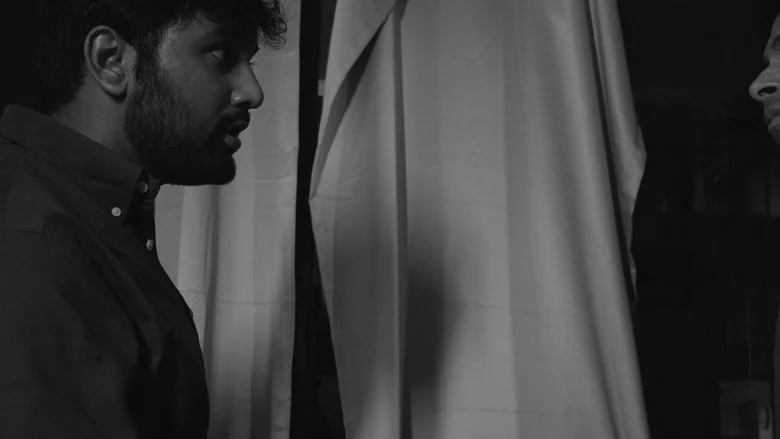
There is a moment early in Aditya Kripalani’s drama where Mouni, a Mumbai actor, improvises during an online audition to provoke a genuine reaction from Adnan, a retired Frankfurt banker. The screen splits between two cities, two lonely lives, and in that hesitation before Adnan responds, you feel the film’s entire thesis click into place: acting as psychology, not performance.
This is a deliberately small film about deliberately large feelings, and it knows exactly how much space it needs to breathe. Whether that restraint works for you depends entirely on how much patience you bring to a two-hander that refuses to raise its voice.
Nawazuddin Siddiqui Finds The Melancholy In A Man Who Has Stopped Performing
Adnan Baig is the kind of role Nawazuddin Siddiqui could sleepwalk through, but he doesn’t. The actor finds the guarded melancholy of a retired banker who signs up for acting lessons as a form of self-excavation, and his performance lives in small shifts of tone and gaze rather than broad gestures.
His best moments come when Adnan is forced to confront his own emotional repression during the video-call exercises. Siddiqui makes you believe that this man has spent decades building walls, and that dismantling them, one vulnerable exchange at a time, is the real drama here.
Chitrangada Satarupa’s Mouni Is The Engine That Keeps The Call Alive
Chitrangada Satarupa carries the film’s more assertive energy, and she is the reason the audition sequence works as well as it does. Her Mouni is a working actor who uses performance as both a shield and a scalpel, and Satarupa navigates that duality with impressive control.
What makes her performance stand out is how she lets Mouni’s confidence crack at precisely the right moments. The coaching passages where she pushes Adnan toward vulnerability reveal her own unexamined wounds, and Satarupa plays that discovery without ever turning it into a theatrical reveal.
The Video-Call Format Is The Film’s Boldest Gamble And Its Sharpest Limitation
Kripalani’s direction commits fully to the premise of a cross-border acting class conducted entirely through screens, and that commitment pays off in the film’s intimacy. The cross-cutting between Mumbai and Frankfurt creates a tension that a conventional multi-location drama might have fumbled, and the distance between the characters becomes a dramatic tool rather than a production constraint.
But the format also imposes a ceiling on what this film can achieve visually. The single-location, call-based structure limits variety, and the middle section relies so heavily on dialogue density that momentum occasionally stalls. Some viewers have noted the stage-play quality of the presentation, and that criticism is fair, even if it is also somewhat beside the point.
The screenplay unfolds mostly in real time across a day-long acting class, and Kripalani trusts his audience to stay with extended conversations that build emotional weight slowly. It is a risk that pays off in the film’s best stretches, but it also means the second half can feel repetitive for those expecting conventional dramatic escalation.
For more films that prize character psychology over plot mechanics, browse our Hindi Drama reviews.
The Supporting Cast Signals A World Beyond The Two Leads
Naveen Kasturia appears in the ensemble as Nishan, and while he is not established as a major narrative driver, his presence signals the broader interpersonal framework around the leads. His casting adds texture to a film that could have easily felt like a closed system between two actors.
Aarti Desai as Niyati Aunty and Ayushi Gupta as Tanaya round out the peripheral world, and even with limited scene detail available, their inclusion suggests a domestic reality that Mouni must navigate. Yasir Iftikhar Khan’s Jaya Jose CL and Meenakshi Arundhati’s Nazia complete the ensemble, and their presence reinforces the film’s interest in how performance extends beyond professional spaces into everyday relationships.
The Box Office Verdict Speaks Louder Than Any Critical Debate
The trade reporting tells a story that might surprise anyone expecting a niche art film to struggle. Koimoi reported the film recovering 47% of its reported ₹1.5 crore budget within 24 hours, and Moneycontrol noted the film nearly recovered its entire budget within two days of its 8 May theatrical release.
By the third day, the India net stood at ₹2.48 crore, according to Moneycontrol, which declared the film a hit based on early trade reporting. The Plex aggregate rating of 7.1/10 and the IMDb score of 7.1/10 suggest that audiences have responded to the film’s emotional restraint and originality, even as some have complained about pacing and the limited physical action inherent in the video-call structure.
I found myself more forgiving of the repetition than I expected, largely because Siddiqui and Satarupa keep the exchanges alive even when the format starts to feel like a constraint. There is something genuinely brave about a film that trusts conversation and vulnerability to carry an entire runtime.
If you are willing to meet this film on its own terms, it rewards patience with a quiet, affecting study of two people learning to be honest with themselves. Watch it on a good screen with headphones, where the intimacy of the video-call framing can work its magic without distraction.
I’m Not An Actor is a restrained, concept-driven drama that earns its emotional payoff through performance rather than plot, and it deserves a solid 3.5 out of 5 for anyone willing to sit with its silences.
For a similar study in performance-driven storytelling, Daadi Ki review explores family dynamics with a lighter touch.
Those who appreciate character-first narratives might also find resonance in Licence verdict, which similarly relies on lead performances to carry uneven stretches.
Ankit Jaiswal is the Chief Author, covering Indian cinema and OTT releases with honest, no-filler criticism. An SEO strategist by background, he brings a research-driven approach to film writing, cutting through hype to tell you exactly what's worth your time.