Batwara 1947 (2026): A Partition Drama That Risks Melodrama for Meaning


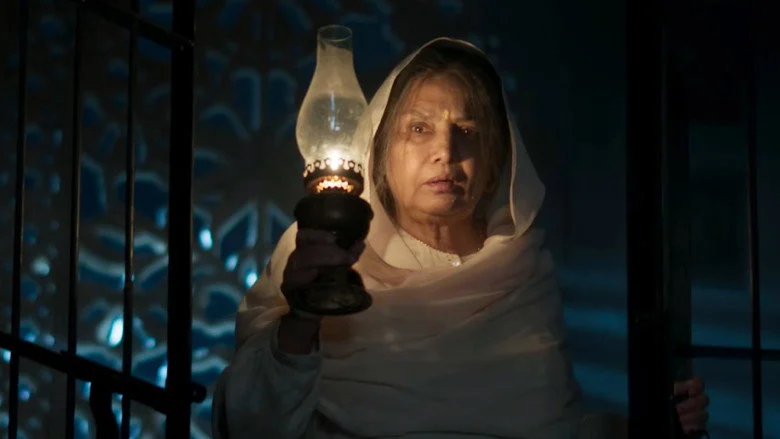
The trailer’s central house-arrival confrontation lands with the force of a slammed door: a displaced Muslim family steps into their allotted Lahore home, only to find an elderly Hindu woman, Mai, refusing to budge. The camera holds on the standoff between Sunny Deol’s protective Sikander and Shabana Azmi’s immovable matriarch, framing a home that is simultaneously a shelter and a battleground. This is not a film about property, it is a moral test about who gets to claim dignity when the world has gone mad.
Sunny Deol’s Restraint Is the Film’s Boldest Gamble
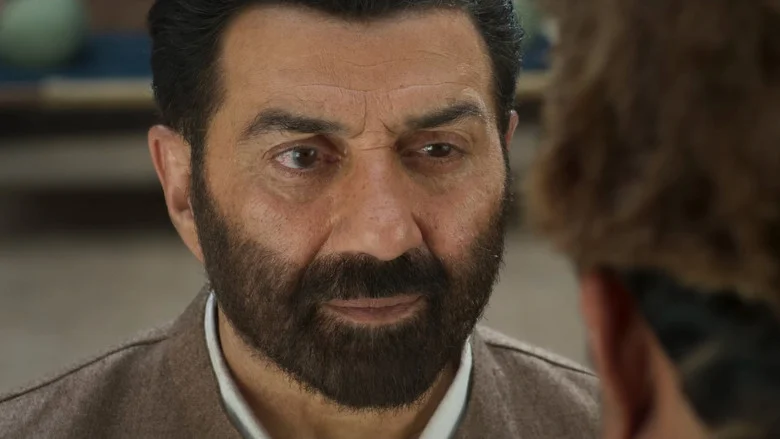
Deol, known for his explosive physicality, appears here in a protective, confrontational posture rather than a purely action-driven one. His Sikander is designed to carry both physical intensity and moral seriousness, a shift that signals Santoshi’s intent to ground the star in dialogue and emotional stakes. The trailer suggests a performance that trades the iconic two-fisted rage for a simmering, protective tension, a risk that could redefine his late-career register. It is a gamble worth taking, though whether he sustains this restraint across 145 minutes remains unverified.
Santoshi’s Chamber Drama Meets Historical Scale
Rajkumar Santoshi’s adaptation approach is clearly dialogue-driven and character-focused, drawing from Asghar Wajahat’s stage play. The contained house-conflict allows historical scale to emerge through personal interaction, avoiding the broad patriotic strokes of similar films. However, the risk is tonal control, whether the film can balance the intimate standoffs with the exterior Partition-violence sequences without lurching into melodrama. The linear screenplay has no confirmed plot holes, but its success depends entirely on whether the emotional confrontation sustains momentum in the second half.
The Genre-Core: Drama That Refuses to Blink
The central house-conflict supports a chamber-drama construction, where the property dispute becomes a proxy for belonging and identity. Santoshi stages the repeated moral standoffs between Deol and Azmi as the film’s spine, turning the home into a test of survival and dignity rather than simple ownership. The trailer’s face-to-face scene between the refugee family and Mai is positioned as the main dramatic hook, and it works because it refuses to resolve into easy sympathy for either side.
Action here operates as context, not spectacle. The exterior Partition-violence sequences frame the personal conflict against the larger historical breakdown, but the drama remains the priority. With Santosh Sivan’s cinematography suggesting interior-haveli staging and controlled composition, the film leans on production design and period texture to carry credibility. The action layer is secondary, a wise choice given the source material’s dialogue-led conflict.
A.R. Rahman’s score is credited, though no confirmed critical response exists yet. The film’s reported ₹150 crore budget, per Wikipedia, signals a production aiming for period authenticity rather than action scale. The question is whether the chamber-drama construction can justify that investment in a market expecting commercial breadth.
Shabana Azmi and the Supporting Cast’s Weight
Azmi’s Mai is the story’s key counterweight, framed as the main moral obstacle rather than a villain. Her refusal to abandon the home is not cruelty but survival, and the trailer suggests she brings the gravitas needed to make the conflict genuinely ambiguous. Preity Zinta’s Hamida anchors the family’s emotional core, while Ali Fazal’s character ties into the film’s broader poetic tone. Karan Deol’s Javed represents the younger generation’s layer, though scene-level performance data remains unavailable. Abhimanyu Singh’s Yakub Khan is listed as the antagonist, but the sources do not establish him as the primary threat in the finished narrative, an interesting choice that suggests the real enemy is circumstance, not a single man.
Reception and the Censor’s Surprising Green Light
The Week reported that the film was cleared by the censor board without cuts, a notable outcome given the sensitive Partition subject matter. No verified controversy is documented, though the historical context naturally places it in a politically charged space. The casting of Deol, Azmi, and Zinta drew immediate attention, and the trailer’s emotional framing was widely noted as the main hook. Pre-release discussion has focused on whether the adaptation will avoid melodrama, but no critic consensus exists yet. The film’s success hinges on execution rather than premise alone.
For those interested in how this stacks up against other recent period dramas, our Hindi Action reviews cover the broader landscape of Partition-era storytelling.
There is no verified audience score or box office verdict yet, as the film has not released. What we have is a trailer promising a drama-first approach, a director known for commercial instincts, and a cast that could elevate even weak material. I remain cautiously intrigued, but the 145-minute runtime demands proof that the chamber-drama premise can sustain itself.
Should you go? If you are a Santoshi or Deol fan, yes, this is a departure from their comfort zones. If you prefer fast-paced commercial action, wait for the reviews. The best format is a regular theater, where the period texture and Rahman’s score can land with full effect.
Batwara 1947 is a risk that could pay off brilliantly or collapse into overreach, but its ambition alone earns it a 3 out of 5 on promise, execution will decide the final verdict.
For a deeper look at how intimacy and displacement shape another narrative, Aligned Apart review explores similar themes through a different lens.
And for another underdog drama that tests its own intentions, Aryabhatt Ka verdict offers a contrasting take on ambition.
Ankit Jaiswal is the Chief Author, covering Indian cinema and OTT releases with honest, no-filler criticism. An SEO strategist by background, he brings a research-driven approach to film writing, cutting through hype to tell you exactly what's worth your time.