
Carmeni Selvam (2026): Samuthirakani’s Stubbornness Mistakes Poverty for Principle


A family function erupts in humiliation when Shanthi, desperate to match social expectations, sells her mangalsutra for an expensive gift. The decision spirals into something far grimmer: a man mistaking his own penury for virtue, watching his marriage corrode under the weight of unpaid debts and the false nobility of refusing to adapt. This is not a story about hardship. It is a story about a man who confuses being broke with being principled.
Ram Chakri’s Tamil drama arrives with a premise that stings because it is recognizable. Yet somewhere between intention and execution, the film loses sight of its own moral reckoning. What emerges instead is something far less honest: a film that congratulates its protagonist for the confusion it has spent two hours documenting.
Samuthirakani’s Modesty Reads as Stubborn Refusal
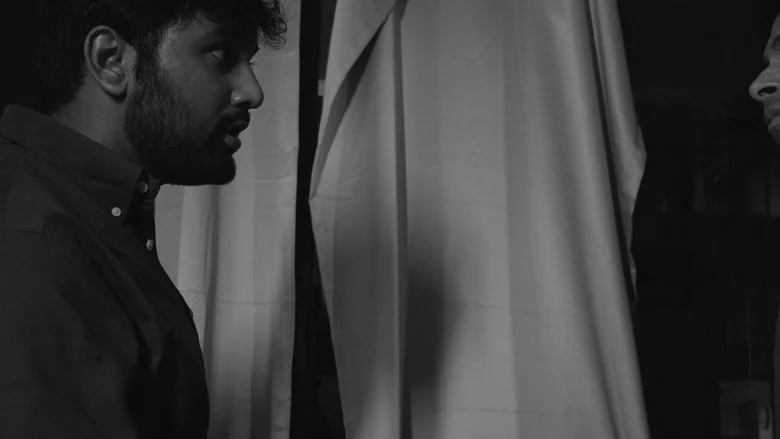
Samuthirakani plays Selvam as a man whose simplicity hardens into something uglier, a refusal to bend that masquerades as principle. His performance is technically sound, a portrait of restraint, but the character’s choices grow increasingly indefensible. He could exit his predicament multiple times. Instead, he digs deeper, and the film presents this not as tragedy but as proof of his integrity.
There is a moment when cab passengers counsel him toward credit cards and easy loans. Selvam rejects their advice with quiet dignity. The scene intends to show his wisdom; it actually reveals his blindness to his family’s suffering.
Ram Chakri’s Script Mistakes Premise for Purpose
The screenplay is linear and observant, tracking everyday choices with the precision of a behavioural study. Yet it contains a fatal flaw: it never decides whether Selvam’s poverty is a condition to escape or a virtue to defend. The result is a film that builds no momentum, offers no moral clarity, and leaves its audience uncertain whether they are meant to sympathize or judge.
Chakri’s direction captures the texture of lower-middle-class life with documentary detail. The writing, however, asks us to root for a man whose choices have become indistinguishable from self-sabotage.
The Drama Hinges on Contrasts That Never Quite Land
The film structures itself around a stark binary: Selvam’s humble life versus Sampath’s wealthy emptiness. Gautham Vasudev Menon plays a prosperous businessman whose money cannot cure his emotional isolation or his ailing wife’s despair. The contrast is intended to prove that poverty and wealth are equally corrosive, that every family bleeds differently.
Yet the comparison collapses under scrutiny. Sampath’s pain is internal; Selvam’s is self-inflicted. One man suffers circumstance. The other manufactures his own cage and calls it honor. The family function humiliation that triggers Shanthi’s desperate sale is the film’s most potent moment, a scene of genuine social shame that propels believable action. But what follows dilutes this momentum.
The cab-ride sequences, meant to function as philosophical waypoints, feel instead like fantasy interludes where strangers dispense wisdom Selvam is too proud to absorb. These passengers exist less as characters than as philosophical props, undermining the film’s grounding in observable reality.
Lakshmi Priyaa Chandramouli Carries the Story’s Actual Moral Weight
Shanthi, played by Lakshmi Priyaa Chandramouli, is the film’s true emotional center. She commits the desperate act that sets everything in motion, and her journey, from humiliation to resignation to a kind of worn-out acceptance, tracks the genuine cost of her husband’s principles. Her performance suggests a film far more unflinching than the one Chakri has made.
She is the character who grows, who bends, who adapts. Selvam, by contrast, becomes calcified, and the film celebrates this as strength.
Audiences See the Melodrama the Critics Miss
Times of India critics awarded the film a blunt 2.0 rating, declaring that Carmeni Selvam “confuses being penniless with being principled, and spends its energy congratulating its protagonist for the mix-up.” The verdict is severe but accurate. What critics identified as philosophical muddiness, audiences described more simply: a melodramatic serial feel that prioritizes emotional beats over coherent character logic.
BookMyShow users rated the film 3.5, praising its relatable middle-class family drama and sharp dialogue. “ஆசைப்பட்டது நீ. அந்த ஆசையை என் மண்டையில ஏத்திவிட்டு என்ன கிறுக்காக்குனது நீ. எல்லாம் உனக்காகவும் பாலுக்காகவும்தான்.” (You desired it. Why did you plant that desire in my head and now drive me insane? Everything was for you and your child.) speaks to a real domestic argument structure that resonates because it is lived.
Yet the same audiences flagged the writing’s inconsistencies, noting that Selvam could resolve his situation at several junctures but chooses not to, a passive quality the film mistakes for tragic nobility.
Families who relate to middle-class financial pressure will find moments of genuine recognition here. Those expecting moral clarity or character growth will find only stubbornness mistaken for virtue. The film’s climax, Selvam taking a driving job in Sharjah, reads as capitulation rather than wisdom, yet the film seems uncertain whether to frame it as defeat or redemption.
Tamil drama enthusiasts searching for layered domestic storytelling will find individual scenes of power. What they will not find is a film confident enough to say what it actually believes about pride, poverty, and the choices we make in their name. Watch this for Lakshmi Priyaa Chandramouli’s quiet endurance and the dinner-table conflict scenes that cut closest to bone; skip it if you need narrative coherence or a protagonist you can trust.
Carmeni Selvam mistakes modesty for morality and asks us to applaud the distinction, a misstep that undermines its own thematic ambitions with a verdict-first approach that prioritizes character stubbornness over character truth, earning it a middling 2.5 out of 5 for its observational texture and relatable premise despite its fundamental confusion about what its own story means.
Similar patterns of working-class authenticity appear in Band Melam review, where everyday struggle grounds narrative purpose with greater precision.
Confined spaces and moral standoffs define Neelira verdict with sharper ideological stakes.
Ankit Jaiswal is the Chief Author, covering Indian cinema and OTT releases with honest, no-filler criticism. An SEO strategist by background, he brings a research-driven approach to film writing, cutting through hype to tell you exactly what's worth your time.