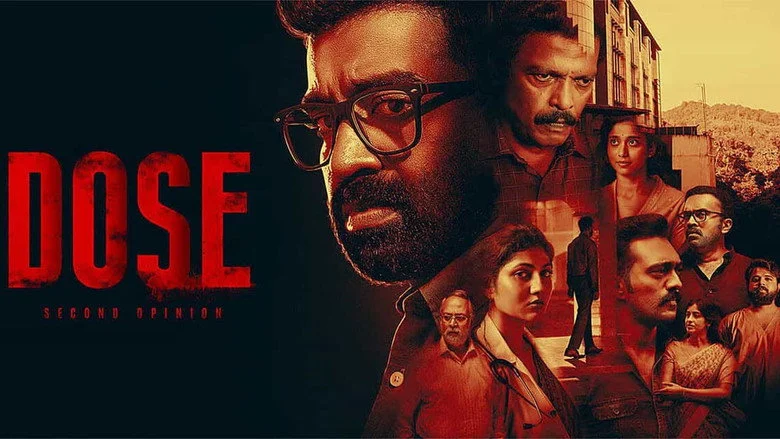
Dose (2026): Wilson s Controlled keeps the film tense but uneven overall


The corridors of a hospital are rarely just corridors in Malayalam thrillers, and Abhilash R Nair’s Dose turns those sterile hallways into a pressure cooker of concealed truths. Dr. Prakash (Siju Wilson) watches unexplained deaths accumulate around him, each one a thread pulling at a larger, institutional secret that seems designed to swallow anyone who pulls too hard.
This is a mystery that knows its terrain, a closed system where saving lives and hiding the truth about death operate under the same fluorescent lights. For genre purists, the setup promises a slow-burn procedural with sharp teeth, but whether it delivers on that promise depends entirely on how patient you are with its measured, clue-dropping first half.
Wilson’s Controlled Descent Into Paranoia
Siju Wilson anchors Dose with the kind of restrained, internalized performance that procedural thrillers demand. His Dr. Prakash doesn’t erupt; he observes, calculates, and slowly lets the weight of each suspicious death press down on his professional composure.
Watch how his initial clinical detachment gives way to a hunted quality as the investigation deepens. Wilson sells the transition from healer to truth-seeker without a single theatrical outburst, which makes his eventual survival-mode shift in the climax feel earned rather than manufactured.
Nair’s Direction: Confinement as a Storytelling Weapon
Director Abhilash R Nair understands that the hospital isn’t just a backdrop, it’s the antagonist’s preferred hiding spot. By keeping the geography tight and the visual language confined to institutional spaces, he creates a sense of inescapable dread that a sprawling city-set thriller would have lost.
The screenplay’s linear investigation structure is its greatest asset, layering revelations with a steady hand. But the script’s weakness emerges in its final stretch, where the reveal-and-resolution phase feels compressed against the meticulous setup that preceded it.
That imbalance, patient storytelling followed by a hurried conclusion, prevents Dose from achieving the full resonance of its central theme about institutional secrecy and buried guilt.
The Mystery Engine: Deaths That Refuse to Stay Routine
The core craft of Dose lies in its ability to make every new death feel like a personal attack on the protagonist’s worldview. The recurring hospital-death setup functions as the primary mystery engine, each incident adding a layer of dread without resorting to cheap jump scares or gratuitous gore.
What elevates the middle section is how the investigation partnership between Dr. Prakash and the troubled investigator transforms from a routine case into an emotional excavation. The clue-collection phase gradually morphs into a survival conflict, where the pursuit of truth carries physical consequences rather than just professional ones.
This shift from procedural inquiry to direct confrontation is where the thriller instincts of Nair’s writing shine brightest. The escalating danger feels organic to the hospital’s closed ecosystem, even if the final payoff doesn’t quite match the thunderous buildup.
Supporting Cast: The Weight of Institutional Memory
Jagadish brings a senior-presence gravitas to Gopinath Vasudevan, functioning as the investigative anchor whose experience contrasts with Wilson’s more reactive energy. His scenes suggest a man who has seen this system fail before, adding a layer of weary wisdom to the mystery mechanics.
Ashwin Kumar’s Vivek Tarakan widens the case’s scope, pushing the narrative from isolated incidents to a recognizable pattern. Drishya Raghunath, as Arundathi Balan, supplies the relational context that humanizes Dr. Prakash’s crisis, reminding us that institutional conspiracies always have personal casualties.
Each supporting player serves the procedural spine effectively, though the film never gives them the individual moments to transcend their functional roles.
Audience Verdict and Commercial Reality
The audience response tells a story of its own, an IMDb rating of 8.3 suggests that those who connected with the film’s deliberate pacing found genuine value in its suspense architecture. Yet the box office paints a harsher picture, with Sacnilk reporting a first-week India net of just ₹0.22 Cr against an estimated budget of ₹60, 000, 000.
That commercial gap highlights a familiar divide between niche genre appreciation and mainstream theatrical viability. The film’s UA16+ certificate and procedural DNA clearly target mystery-thriller purists rather than casual weekend audiences, and the low theatrical turnout reflects that positioning.
I found myself respecting the film’s commitment to its closed-room mystery structure more than admiring its execution in the final act. The hospital setting as a microcosm of compromised systems is a strong conceptual choice, but the resolution’s haste undercuts the careful dread that the first two acts worked so hard to build.
For those who appreciate Malayalam cinema’s willingness to treat suspense as an intellectual exercise rather than a spectacle, Dose offers a rewarding middle section and a committed lead performance. Watch it in a quiet setting where the confined visuals and procedural rhythm can work their effect without distraction.
If the hospital’s walls could talk, they’d tell you that Dose earns its mystery credentials in the investigation but loses its nerve at the reveal, a solid 3 out of 5 for genre enthusiasts who value atmosphere over airtight conclusions.
For more compelling Malayalam crime dramas, explore our Malayalam Thriller reviews.
If you appreciated Wilson’s restrained investigator energy, you might find similar textures in System review.
For another regional mystery that refuses easy answers, check out Ugly Story verdict.
Ankit Jaiswal is the Chief Author, covering Indian cinema and OTT releases with honest, no-filler criticism. An SEO strategist by background, he brings a research-driven approach to film writing, cutting through hype to tell you exactly what's worth your time.