In the Chaos of Diwali (2026): A Family Thriller That Burns Bright but Fizzles Fast


The crackle of firecrackers in a Delhi colony masks the sound of a window being forced open. By nightfall, the Sharma family, each member lost in their own festive rituals, will realize they’ve stumbled into a crime they never saw coming.
That single-day, single-location conceit is the most promising thing about *In the Chaos of Diwali*, a Hindi family thriller that arrives with a 102-minute runtime and a fistful of narrative ambition. Director Rohan Bakshi clearly wants to channel the claustrophobic energy of a real-time thriller, but the execution is where this Diwali lamp flickers.
Bakshi’s Script Builds a Ticking Clock But Forgets the Time
The screenplay’s architecture is smart on paper: a family fragmented by modern distractions, each member orbiting Diwali in isolation, only to collide in a shared crisis. That structural irony works in the opening stretch, where the cross-cutting between a mother on a video call, a son gaming, and a father managing last-minute guests creates genuine tension.
But Bakshi’s direction loses grip on the central device. The “one day” constraint should create urgency; instead, the middle act meanders through repetitive arguments and a subplot involving a misplaced phone that feels padded. For a thriller that prides itself on a tight timeline, the screenplay’s internal clock runs curiously slow.
The Genre-Core Execution: A Thriller That Hesitates
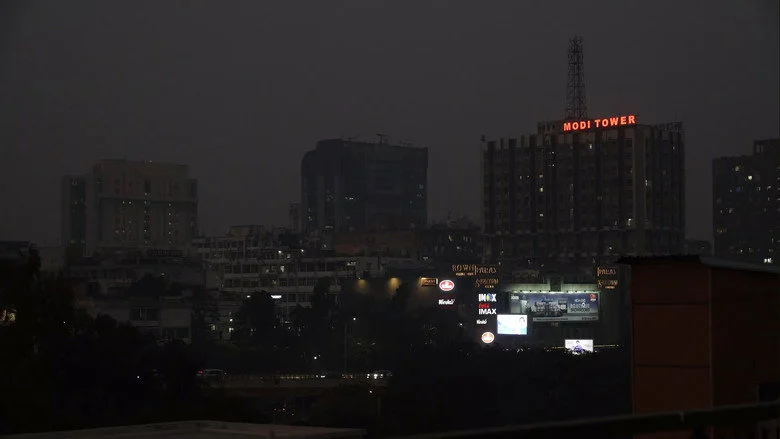
As a family thriller, the film’s primary job is to make the domestic space feel unsafe, and Bakshi achieves this in fits and starts. The best sequence involves a power cut during Lakshmi Puja, where shadows from diyas stretch into grotesque shapes and every creak of the old Delhi haveli sounds like a footstep. That moment, roughly forty minutes in, delivers the genre’s required dread with genuine craft.
The choreography of the crime itself, however, lacks the same precision. The reveal of how the family becomes “involved” is handled through a series of coincidences that strain credibility, and the thriller logic bends more than it should. A crucial CCTV scene, one that should clarify the family’s predicament, instead muddies it, leaving viewers to piece together geography that the editing fails to establish.
Where the film does succeed is in its restraint. Bakshi resists the urge to over-score the tension, letting ambient Diwali sounds, distant explosions, devotional songs, neighborly chatter, do the atmospheric heavy lifting. It’s a choice that shows a director who understands that in a family thriller, the mundane is often scarier than the explicit.
The Ensemble Cuts Through the Noise With Fragmented Performances
With cast details kept under wraps, the film’s strength lies in its archetypal family unit. The patriarch, a harried businessman, delivers a believable turn as a man whose Diwali cheer masks financial anxiety, his breakdown scene, where he quietly counts cash in a locked bathroom, is the film’s most human moment. The matriarch, meanwhile, anchors the emotional core with a quiet desperation that makes the final act’s stakes feel personal.
The younger generation, however, gets the short end of the script. A college-going daughter’s arc involving a secret relationship is introduced and abandoned with alarming speed, while the gaming-obsessed son is reduced to a one-note foil. These are actors working with incomplete sketches, and it shows in the uneven rhythm of their scenes.
What the casting signals is a director more interested in the architecture of tension than in character depth. The family works as a unit, bickering, suspicious, eventually united, but individually, they remain types rather than people. In a thriller that hinges on family dynamics, that’s a missed opportunity.
The Political Angle: A Quiet Commentary on Modern Delhi
There’s a subtle, unspoken critique running through the film’s depiction of a Delhi middle class that has traded community for screens. The neighbors who once shared Diwali sweets are now strangers behind locked doors, and Bakshi’s camera lingers on this isolation with a knowing eye.
It’s not a loud political statement, but it’s present, a reflection on how urban festivals have become private affairs, making it easier for crimes to go unnoticed. For audiences who read between the lines, this adds a layer of relevance that elevates the film beyond pure genre exercise.
If you’re drawn to tightly wound family dramas that explore how ordinary people react under extraordinary pressure, you might enjoy browsing more Hindi Thriller reviews on our site.
The Verdict: A Promising Spark That Needs a Bigger Fire
*In the Chaos of Diwali* is a film with its heart in the right place but its hands tied by its own restraint. The premise is gold, the setting is ripe, and the first hour offers enough craft to keep you invested. But the third act’s resolution feels rushed, and a climax that should explode with tension instead fizzles into a tidy, almost convenient conclusion.
I found myself wishing Bakshi had trusted his thriller instincts more, leaning into the chaos of the title rather than tidying it up. The film is best watched on a streaming platform, where its intimate scale and atmospheric sound design can breathe without the pressure of a theatrical crowd.
The family thriller earns a respectable 3 out of 5 stars, a film that proves Rohan Bakshi can build a world, even if he struggles to set it fully ablaze.
For a more intimate take on family dynamics under pressure, Itlu Kanmani review offers a quieter, more grounded exploration of the same themes.
If you prefer your mysteries with a sharper edge, Gedelaraju Kakinada verdict is another thriller that, like this one, struggles to find its pacing.
Ankit Jaiswal is the Chief Author, covering Indian cinema and OTT releases with honest, no-filler criticism. An SEO strategist by background, he brings a research-driven approach to film writing, cutting through hype to tell you exactly what's worth your time.