
Maa Behen (2026): Madhuri Dixit Anchors Family Crime-Comedy on Netflix


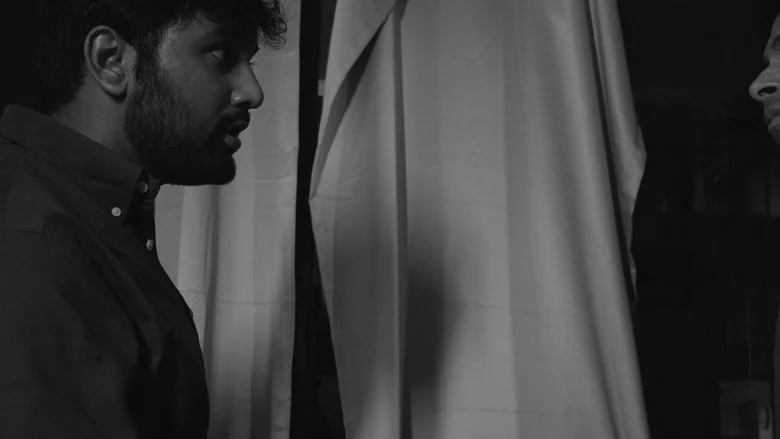
A dead body surfaces in the kitchen. Three estranged women, a mother and her daughters, stare at it in horror, then make a choice that spirals into panic, lies, and darkening comedy. Maa Behen traps its central trio inside a middle-class colony where every neighbor watches, every secret leaks, and survival demands they stop being a family and start being criminals.
Director Suresh Triveni’s film lands on Netflix on June 4, 2026, as a black comedy thriller built on the collision between domestic dysfunction and sudden crime. The premise alone signals whether you’ll engage: forced female bonding under moral pressure, laced with the friction of unresolved resentment and the absurdity of cover-ups gone sideways.
Madhuri Dixit Steps into Comic Desperation
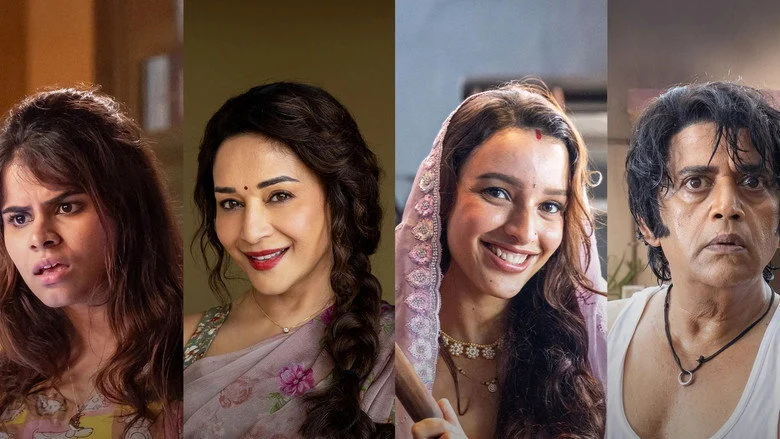
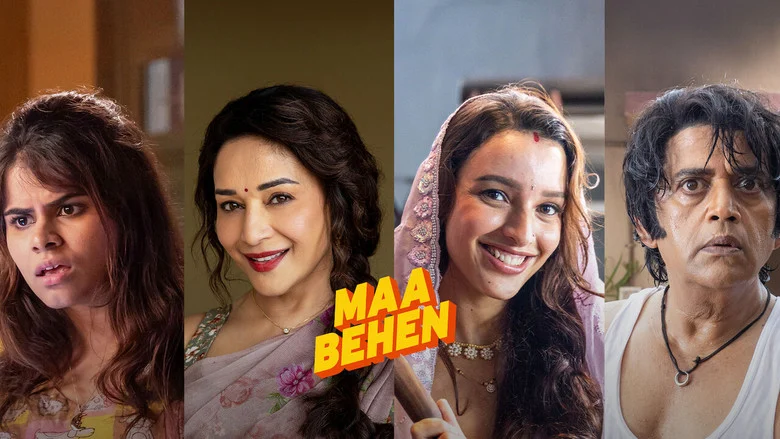
Madhuri Dixit carries the film as Rekha, the mother whose presence anchors the chaos. Pre-release framing positions her not as a nurturing matriarch but as a woman thrust into comedic panic, a deliberate pivot away from her dramatic register. She is the axis around which her daughters’ dysfunction rotates, and the role demands she find humor in helplessness rather than control.
The casting itself signals intent: Dixit in a comic-thriller, working against type, suggests the film understands that performance value lies in watching A-list actors embrace discomfort and absurdity rather than inhabit familiar emotional territory.
Triveni’s Tonal Balancing Act: Ambition and Execution
Suresh Triveni constructs a film that stacks multiple genres, family drama, black comedy, thriller suspense, crime coverup, atop a single pressure cooker. The strength lies in the premise’s architecture: a nosy middle-class colony setting naturally generates both comedic surveillance and genuine threat. Triveni understands that confined spaces and social judgment create organic tension.
The screenplay, co-written with Pooja Tolani, rests on escalation: discovery becomes panic, panic becomes conspiracy, conspiracy becomes impossible. Yet without post-release analysis available, the exact execution of this escalation, whether pacing holds, whether tone shifts feel earned or jarring, remains unverified. The ambition is clear; the landing uncertain.
Genre Mechanics: Where Black Comedy Meets Crime Concealment
The film’s primary pressure comes from the dead body in the kitchen, a moment designed to rupture normalcy and force rapid decision-making. From that point, humor emerges not from scripted jokes but from panic-driven misunderstandings: suspicious neighbors, unwanted police attention, evidence that refuses to disappear, and three women who cannot agree on whether to confess or commit deeper to the lie.
The comedy-thriller balance depends on audience tolerance for moral ambiguity without judgment. If the film leans too hard into the women’s culpability, it becomes dark. If it softens their choices with sympathy, it becomes a family drama wearing a crime mask. The fact that this tonal divide exists suggests the film is attempting something more complex than straightforward thriller mechanics.
Whether Triveni maintains control across both registers depends on editing rhythm, performance tone-matching, and the willingness to let scenes breathe without underlining emotion. The conceptual strength is undeniable; the craft execution awaits verdict.
We examine more Bollyflix movie reviews to track how contemporary filmmakers are reshaping the genre.
Triptii Dimri and Dharna Durga in Fractured Family Dynamics
Triptii Dimri and Dharna Durga occupy the daughter roles, positioned as the estranged second and third vertices of the family triangle. Their casting, Dimri as an established performer and Durga as a reported debutant, creates an internal hierarchy that mirrors real family imbalance. Dharna’s outsider status as a newcomer may itself become a subtext of who belongs and who is treated as peripheral within the unit.
The emotional core depends entirely on whether these three actresses find distinct vocal registers and physical rhythms that communicate their separate relationships to the crime and to each other.
Ravi Kishan as the Plot Catalyst, Not the Story
Ravi Kishan appears as the dead pandit, the local religious figure whose corpse triggers everything. He is described in coverage as already deceased when the action begins, making his presence felt entirely through absence and what his death means socially. The role is narrative device rather than character; his casting signals how the film intends to treat death: not as tragedy but as complication.
Supporting cast including Geetanjali Kulkarni, Arunoday Singh, and Shardul Bhardwaj fill the neighborhood ecology without detailed character information available. Their function appears to be creating the social pressure, the watching eyes, the intrusive questions, the threat of exposure.
Maa Behen arrives as a curiosity: Madhuri Dixit in darkly comedic terrain on a streaming platform, surrounded by an ensemble designed to create maximum social friction inside a single domestic space. The film commits to tonal risk, mixing family wound-reopening with slapstick panic and genuine criminal jeopardy. Whether Triveni holds all three registers in simultaneous suspension, or whether the tone fractures under its own ambition, depends entirely on execution details that only the film itself will reveal.
If you approach this as a character-driven comedy-thriller about what pressure does to family bonds, the premise rewards engagement. If you expect clean genre boundaries or moral clarity, the film’s apparent refusal to provide either may frustrate. On Netflix, the stakes are low and the setting intimate, ideal conditions for this kind of contained, character-friction-driven experiment.
Madhuri Dixit’s willingness to occupy comedic desperation suggests the film knows what it wants from its lead; whether the ensemble and director sustain that energy across two hours remains the open question. Maa Behen attempts dark comedy-thriller fusion with an A-list anchor and confined-space mechanics, landing somewhere between audacious and uncertain, a film worth watching for its ambition, even if execution proves uneven, earning a measured 3 out of 5.
The dysfunctional-family premise echoes themes explored in Hai Jawani review, though here relationship fractures drive crime rather than romantic entanglement.
Both films share Triveni’s directorial eye for ensemble dynamics under social pressure, much like Great Grand verdict uses family as its emotional scaffolding.
Ankit Jaiswal is the Chief Author, covering Indian cinema and OTT releases with honest, no-filler criticism. An SEO strategist by background, he brings a research-driven approach to film writing, cutting through hype to tell you exactly what's worth your time.