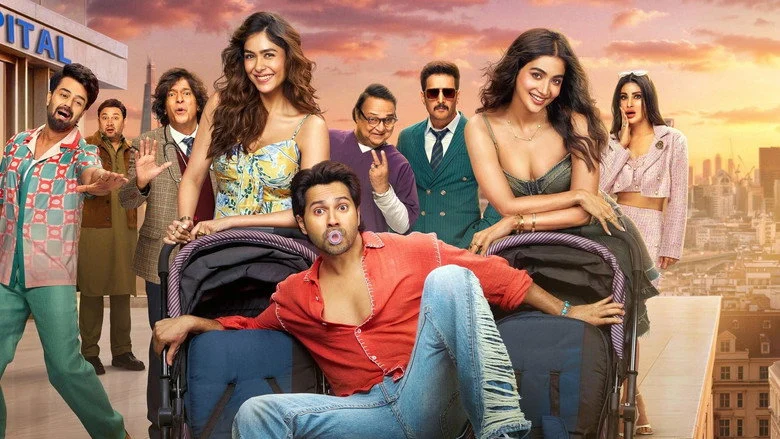
Hai Jawani Toh Ishq Hona Hai (2026): Varun Dhawan’s Marital Tangle Tests Comedy-Romance Balance


Jass watches his marriage collapse under the weight of incompatible dreams, his hunger for family, Bani’s unwavering grip on her career, while the space between them widens into something neither can repair. What begins as a familiar domestic fault line soon fractures into something messier: a new romance blooming abroad, emotional confusion cascading across continents, and revelations that punch harder than the premise initially suggests.
David Dhawan returns to the romantic comedy-drama terrain he knows well, but whether this particular triangle survives its own weight depends entirely on how sharply Varun Dhawan pivots between comic fumbling and genuine emotional reckoning. The film arrives positioned as mainstream entertainment for multiple audience tiers, yet carries the burden of executing a tonal balance that has undone better-resourced films.
Varun Dhawan Threads Confusion Between Comic Timing and Marital Collapse
Dhawan’s Jass must carry the film’s entire emotional architecture, he’s simultaneously the architect of his own marriage’s dissolution and the bewildered man caught between two romances. The script demands he oscillate between situational comedy (confusion abroad, comedic misunderstandings) and moments of genuine accountability, where his choices finally crystallize into consequence. His performance’s credibility hinges on whether he sells both registers without tipping into caricature or self-pity.
The character’s arc, from conflicted husband to emotionally unmoored romantic to humbled participant in his own reckoning, requires an actor who can make each pivot feel organic rather than scripted. Dhawan’s comedic instincts are reliable, but whether he can ground the emotional reversals without losing audience investment remains the film’s central performance gamble.
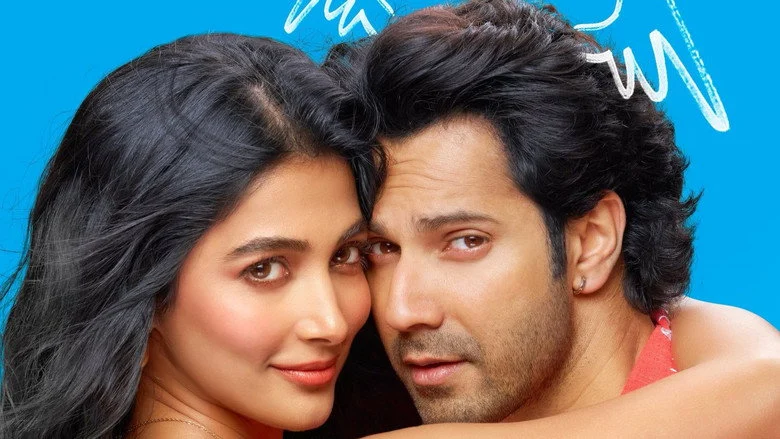
David Dhawan’s Direction Favors Clarity Over Complexity
Dhawan’s strongest asset here is structural legibility: the marital breakdown, the new romance, the revelations, and the resolution follow a readable throughline that commercial audiences can follow without strain. His direction positions each beat clearly, allowing the comedy to breathe and the emotional conflicts to register. But legibility and originality are not synonyms. The film treads well-worn terrain, marriage under strain, separation sparked by incompatible life goals, complications abroad, without evident stylistic innovation or tonal surprise.
The screenplay by Yunus Sajawal, Sachin Kumar Singh, and Farhad Samji (dialogue) leans heavily on reversal and twist as emotional payoff. That mechanic works when execution is sharp; it collapses into predictability when it isn’t. The available evidence suggests competent construction rather than textural depth, which for a Dhawan film means commercial viability but thematic caution.
Romance Genre Demands Believable Chemistry and Earned Emotional Turns
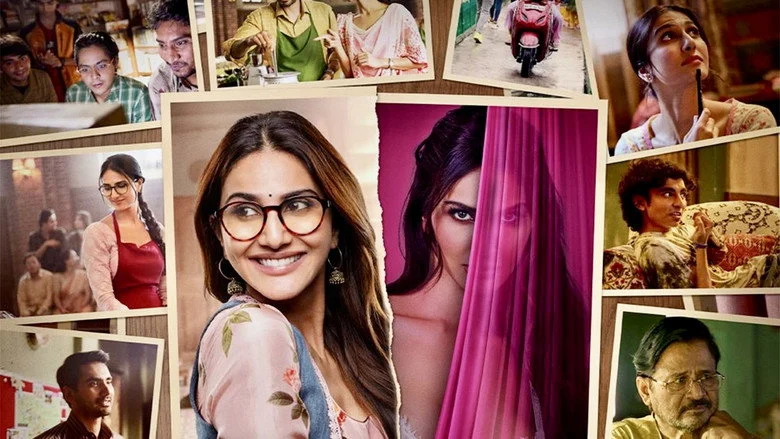
The film’s romantic architecture rests on three pillars: Jass and Bani’s marriage, Jass and Pooja Hegde’s new romance, and the emotional truth buried beneath both. For a romance to sustain through two hours and 18 minutes without feeling like a series of separable scenes, the chemistry between leads must communicate why the central relationship matters enough to break. Mrunal Thakur carries the emotional weight of the marriage’s failure, her Bani isn’t a villain or an obstacle, but a woman whose ambitions are treated as legitimate within the film’s value system. That choice elevates the relationship conflict beyond standard domestic melodrama into something resembling a genuine incompatibility.
Pooja Hegde’s introduction as the new romantic interest adds narrative complication, but her role’s function remains unclear from the available material. Is she a redemptive figure, a complication, or a mirror held up to Jass’s own avoidance? The answer determines whether the romantic triangle functions as emotional exploration or plot mechanism. Without clarity on her character’s thematic purpose, the second romance risks feeling grafted rather than organic.
The climax’s revelation sequence, where assumptions about loyalty, commitment, and emotional consequence collide, is structurally the film’s gravitational center. That beat will land or fail based entirely on whether the preceding scenes have earned the audience’s investment in caring which choice Jass makes. A revelation without earned stakes is merely information; with them, it becomes the emotional core that justifies the entire narrative investment.
For Hindi romance-comedies, the audience appetite remains robust for family-drama hybrids that blend domestic conflict with comedy and commitment-focused resolution. Hindi film reviews examining genre conventions in commercial romance entertainment remain essential reading for understanding how this film measures against its category.
Mrunal Thakur Anchors the Marriage’s Emotional Logic
Thakur’s Bani is structurally the film’s moral compass, her career ambitions don’t exist as a convenient obstacle but as a legitimate life priority that simply cannot coexist with Jass’s timeline for parenthood. She carries the weight of being simultaneously sympathetic and unbendable, a woman whose reasonableness doesn’t solve the core incompatibility. Her scenes likely require a precision between firmness and vulnerability; she must be neither villain nor doormat, but a fully realized person whose choices have consequences she didn’t anticipate. This is ensemble work that shapes the entire moral landscape of the film.
Pooja Hegde enters as narrative complication, but her exact function, whether she’s meant to be a romantic salvation, a dangerous distraction, or a test of Jass’s actual priorities, determines her thematic weight. Without character-level specificity from the sources, her role reads as a structural device rather than a fully inhabited presence. Maniesh Paul, Chunky Panday, Jimmy Sheirgill, and Mouni Roy complete the ensemble, likely in comic-relief and situational-support capacities, though their narrative function remains underdefined in available materials. For a mainstream film targeting “fans, mass, family, and class” audiences simultaneously, supporting-cast clarity typically distinguishes between a comedy that lands broadly and one that feels scattered across competing tones.
The Film’s Emotional Gamble Outweighs Its Execution Evidence
No controversies or political dimensions appear to surround the film’s production or release. The central risk instead is purely narrative: whether a story about marital dissolution and romantic confusion can sustain emotional investment across a 138-minute runtime without feeling like a series of familiar setpieces. The film positions itself for audiences expecting emotional payoff alongside comedy, a category that includes family viewing, romantic-comedy devotees, and mainstream-entertainment consumers. That’s a broad coalition, but it also means the film cannot afford weak emotional execution or scattered tonal control.
Dhawan’s track record suggests competent mainstream delivery, but competence and genuine surprise are different currencies. The film arrives at a moment when romantic comedies must choose between leaning into genre convention (marriage, commitment, domestic responsibility) or interrogating it. The available evidence suggests the former; whether that feels like earned stability or comfortable repetition depends entirely on performance depth and screenplay precision.
This is a film built for regular-format theatrical viewing in a family setting. Its pleasures are likely to be those of mainstream entertainment, recognizable conflict, comedy beats, emotional clarity, and tonal readability. If Varun Dhawan can anchor the character’s emotional confusion with real stakes, and if Mrunal Thakur’s Bani remains sympathetic even when immovable, the film may transcend its familiar premise. If the comedy overshadows the commitment themes, or if the revelation sequence feels mechanically deployed rather than earned, it collapses into the very repetition it seems aware of.
The film doesn’t demand serious analytical effort so much as genuine emotional engagement. For viewers comfortable with mainstream Hindi romance that takes its commitment themes seriously, this may well deliver. For those expecting formal innovation or thematic complexity, the premise alone signals caution. Theatrically, it’s positioned for broad appeal; streaming will likely soften its reliance on ensemble chemistry and tonal control.
Varun Dhawan’s willingness to sit in confusion and emotional consequence, rather than deflecting into charm, will determine whether this film earns its runtime or simply occupies it. Hai Jawani Toh Ishq Hona Hai is a mainstream romance-comedy with emotional stakes, a decent bet for committed viewers, though not quite a must-see, I’d rate it a solid 3 out of 5 for its intended audience.
The Great Grand Superhero similarly centers a lead actor navigating complex emotional terrain alongside ensemble comedy, proving that Dhawan collaborators excel when character grounding matches spectacle.
Raja Shivaji demonstrates how ambitious Hindi cinema can honor commitment and responsibility as thematic weight, a lesson applicable to any domestic romance attempting genuine stakes.
Readers looking for more hindi romance reviews can explore them on BollyFlix.
Ankit Jaiswal is the Chief Author, covering Indian cinema and OTT releases with honest, no-filler criticism. An SEO strategist by background, he brings a research-driven approach to film writing, cutting through hype to tell you exactly what's worth your time.