Monkey In A Cage (2026): A Rape Accusation Thriller That Tests Justice System Limits


Samar’s world collapses the moment his ex-partner Gayatri accuses him of rape after he blocks contact with her, a bombshell that lands while he’s building a life with someone new. The legal machinery accelerates before truth can catch breath, transforming a personal rejection into a criminal inquiry that devours his reputation, relationships, and freedom in one devastating sequence.
This is a thriller that treats the justice system itself as the true antagonist, not a plot device. The film’s central stakes hinge on whether institutional corruption can bury an individual beneath procedure and prejudice before evidence or reason can surface. From that premise alone, Monkey In A Cage signals it intends to probe something uncomfortable: the vulnerability of the accused when institutions weaponize accusation.
Samar’s Arrest Becomes the Thriller’s Moral Turning Point
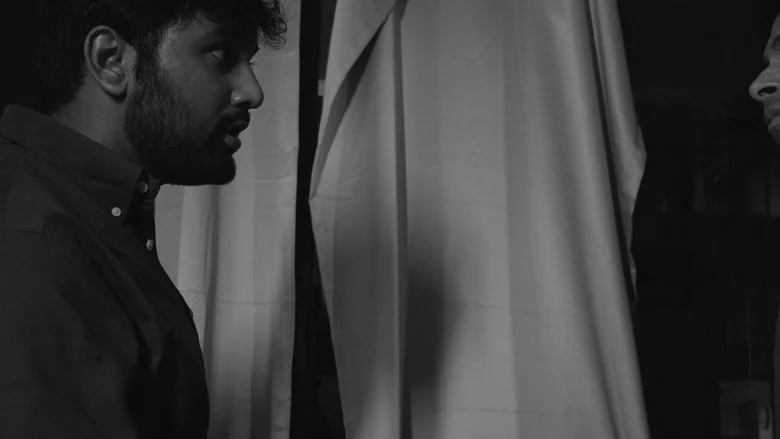
The moment Samar is taken into custody marks the film’s shift from personal crisis to systemic entrapment. His detention is not framed as procedural, it feels inevitable, crushing, and designed to illustrate how quickly innocence becomes irrelevant once an institution mobilizes against you. This sequence is where the thriller reveals its teeth.

Direction Builds Procedural Tension, But the Screenplay Walks a Dangerous Line
The film constructs its narrative around institutional weight rather than spectacle, which is a deliberate choice that mostly works. Tracking Samar’s deterioration through arrest and accusation carries psychological force. However, a thriller built entirely on “system versus man” requires either moral clarity or genuine ambiguity, and the available structure suggests the screenplay may not fully commit to either, it floats between sympathy and complexity without settling on which truth matters most.
The Thriller Operates Through Accusation, Investigation, and Institutional Collapse
The film functions as a pressure-cooker built on legal procedure and moral stakes rather than action sequences or plot twists. Samar’s confrontation with a corrupt justice system is the engine driving forward, each interrogation, each legal move, each public revelation tightens the noose. The premise itself is the mechanism of suspense.
This approach demands precision in screenplay construction. The thriller cannot rely on violence, chase sequences, or last-minute reversals to land its weight. Every dialogue exchange, every procedural detail, every institutional decision must register as both inevitable and unjust. The clearest tension point available, Samar’s arrest following Gayatri’s accusation, suggests the film understands this discipline, building dread through consequence rather than spectacle.
Yet a legal thriller also requires either a clear judicial endpoint or genuine moral fog. Without that anchor, procedural tension risks feeling repetitive once the initial accusation has landed. The available material doesn’t confirm whether the screenplay resolves this problem in the final act, it leaves the audience’s verdict uncertain.
For those seeking intelligent crime and legal-system reviews, our collection of Hindi Thriller reviews includes similar narratives that interrogate institutional power.
Gayatri and Khushi Exist as Moral Anchors, Not Characters
Gayatri’s accusation is the inciting incident, but the available material doesn’t reveal whether she functions as a character with her own complexity or as a narrative device that represents betrayal and institutional weaponization. The same uncertainty applies to Khushi, whose presence as Samar’s new partner signals either a love-triangle subplot or a proxy for what Samar stands to lose. Without performance data, it’s impossible to assess whether these roles transcend their functional roles or remain sketch-work.
The Corrupt Justice System as Antagonist Risks Abstraction Without Human Opposition
Framing institutional corruption as the central antagonistic force is thematically ambitious. However, abstract systems rarely generate the visceral opposition that thrillers require. Without a specific prosecutor, judge, or investigator embodying that corruption, the film may settle into procedural sequences that feel bureaucratic rather than adversarial. The best legal thrillers personify the system through a human villain, it remains unclear whether Monkey In A Cage makes that move.
This is Essential Viewing for Audiences Ready to Question Institutional Power
The film targets viewers who engage with serious, issue-driven narratives rather than those seeking escapism. Legal dramas and accusation-based stories attract cinephiles willing to sit with moral discomfort. This film demands that willingness from its first frame. If you’re looking for a thriller that interrogates procedure, power, and prejudice rather than resolves through action, this is precisely the film to pursue.
Skip it if you need broad entertainment or light-touch storytelling. Monkey In A Cage is designed for viewers who believe cinema should provoke institutional critique, not provide reassurance that justice systems work. The premise itself is a filter, if you resist the accusation-based setup or find rape allegations in fiction manipulative, this film will test that boundary hard.
Monkey In A Cage is a calculated risk: a legal thriller that trusts institutional critique over spectacle, a bet that pays off only if the screenplay executes its procedural precision with full moral commitment. I’d rate it a solid 3.5/5 for ambitious premise and institutional focus, though execution clarity remains the deciding factor.
The raw power of accusation also drives the narrative tension in Mollywood Times review, where character testimony becomes the film’s central weapon.
Family and institutional conflict similarly anchor the dramatic weight of Maa Behen verdict, another film that weaponizes accusation and system pressure as narrative fuel.
Ankit Jaiswal is the Chief Author, covering Indian cinema and OTT releases with honest, no-filler criticism. An SEO strategist by background, he brings a research-driven approach to film writing, cutting through hype to tell you exactly what's worth your time.