
Sudesha (2026): A Protest Born lands hard though the screenplay stays patchy



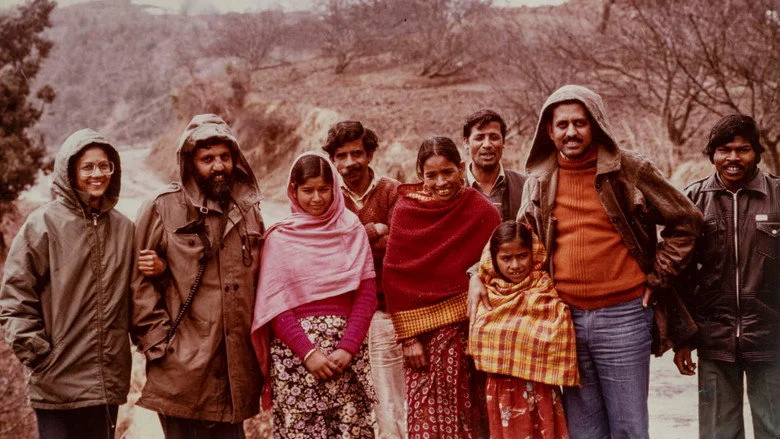
The women of the lower Himalayas walk miles for firewood, water, and food before the sun crests the ridge. Sudesha opens not with a rally but with this daily grind, establishing the material truth that forest destruction is not an abstract policy failure, it is an immediate threat to survival.
This 34-minute documentary from the Yugantar Film Collective refuses to romanticize the Chipko movement. It grounds the activism in geography, labor, and the unglamorous reality of political commitment.

K. Lalita’s Sudesha Devi: Activist as Everywoman
K. Lalita carries the film as Sudesha Devi, a village activist whose political life never separates from her domestic burden. The performance reads as lived experience rather than acted conviction, particularly in the sequences where protest planning happens alongside family labor.
Lalita’s presence signals the film’s core argument: these women are not symbolic bystanders to a movement led elsewhere. They are the movement’s engine, and the documentary treats their agency with a seriousness that mainstream cinema routinely denies rural women.
Documentary Craft: Observation as Evidence
The Yugantar Film Collective builds its case through patient observation rather than reenactment spectacle. The forest-dependence sequences, gathering firewood, foraging food, drawing water, serve as the film’s primary evidentiary base, making the stakes tactile before any confrontation begins.
This is documentary as political pedagogy, but the teaching never feels clinical. The Himalayan terrain is photographed as lived geography, not postcard scenery. The mountains are where women work, organize, and eventually face imprisonment.
The protest and jail sequences land with quiet force because the film has established what is at stake. Sudesha Devi’s continued commitment after release closes the narrative on a note of resilience rather than triumph, an honest choice for a movement that is still fighting.
Supporting Cast: The Collective Body of Resistance
Poornachandra Rao, Rama Melkote, K. Shyamala, and K. Seethadevi populate the film’s world as part of a collective portrait. The absence of individual character detail for these performers is itself a political statement, this is a movement of many, not a star vehicle.
Their presence reinforces the documentary’s feminist framing, showing women’s participation in Chipko as a mass phenomenon rather than isolated heroism. The casting choices prioritize authenticity over recognizability, a decision that serves the film’s grassroots ethos.
Context and Consequence: The Film’s Political Spine
Sudesha situates its protagonist within the wider Chipko movement, including the repression that followed. The film’s refusal to name a single villain is correct, the opposition here is institutional and economic, embodied by timber interests and state power rather than a melodramatic antagonist.
The documentary connects environmental destruction to everyday rural livelihoods with a clarity that many longer, better-funded films miss. For audiences unfamiliar with Chipko’s history, this 34-minute primer offers a concise entry point into a movement that mainstream Indian cinema has largely ignored.
I found the film’s brevity to be an asset; it respects the viewer’s intelligence while delivering its argument without padding.
For those interested in documentary cinema that treats political struggle as lived process, Sudesha rewards attention. It is a film about why women fight for forests, not because trees are sacred, but because forests are survival. Watch it for the history, stay for the quiet fury of its conviction. More Hindi Documentary reviews await those who want cinema that engages with the world rather than escaping it.
Sudesha is a necessary corrective to the erasure of women from Chipko’s popular memory. If you care about environmental justice or feminist history, this is essential viewing, a compact, rigorous work that earns its place in the documentary canon. I rate it 3.5 out of 5 for its political clarity and unvarnished portrait of resistance.
For another look at grassroots determination told with similar restraint, Max Min review finds its own quiet pulse in domestic silences.
Those seeking a different register of collective energy might find Dhamaal 4 verdict a chaotic counterpoint to this film’s disciplined focus.

Ankit Jaiswal is the Chief Author, covering Indian cinema and OTT releases with honest, no-filler criticism. An SEO strategist by background, he brings a research-driven approach to film writing, cutting through hype to tell you exactly what's worth your time.