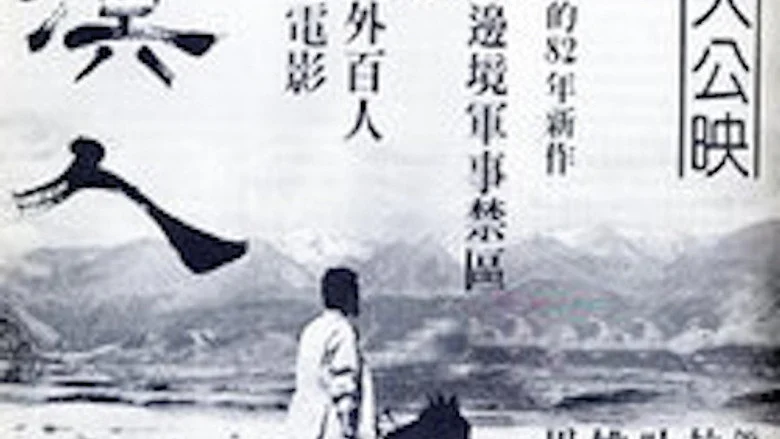
Souls of the Wind (1982): Cissé’s Poetic Protest Drama Still Resonates


Fousseyni Sissoko’s Bah is the quiet storm at the center of this political drama. He carries the student movement’s weight without reducing it to slogans, making his internal conflict as visible as the street-level tension.
His performance works because he never lets the romance soften the political edge. Bah’s relationship with Batrou exists in the shadows of state surveillance, and Sissoko plays that suffocation with a restrained, simmering intensity.
Direction That Refuses Easy Answers
Souleymane Cissé directs with the patience of someone who has lived through the history he is depicting. He frames the generational divide not as a shouting match but as a slow, inevitable collision between hope and hardened authority.
The screenplay’s weakness is its reluctance to individualize the state’s cruelty. The repression remains faceless, which is politically accurate but dramatically diffuse, we feel the pressure without ever seeing the hand that squeezes.
The Protest as the Film’s True Protagonist
Cissé builds his drama on the streets, not in private chambers. The student protest sequences are the film’s spine, choreographed with a documentary-like urgency that makes the political stakes feel immediate and physical.
What distinguishes the craft here is how the director links romance to instability. The lovers’ moments are never safe; every embrace feels borrowed from a clock that is about to run out. That tension keeps the drama from becoming sentimental.
The state’s response to activism forms the film’s escalating engine. Cissé does not glorify the protest, he shows its cost, its chaos, and the way it fractures families as much as it unites movements. That ambiguity is the film’s quiet strength.
Goundo Guissé and the Female Gaze on Resistance
Goundo Guissé’s Batrou is not a passive love interest; she is the film’s emotional barometer. Her scenes with Bah reveal how political pressure seeps into private intimacy, and Guissé plays that erosion with a quiet, knowing sadness.
Her presence signals the film’s intent to treat the personal as political. Batrou’s choices matter because they are made under the same repressive weight as Bah’s, she just expresses her resistance differently, and Guissé makes that difference visible in every glance.
Balla Moussa Keita’s supporting appearance adds a layer of gravitas to the ensemble. His casting suggests the older generation’s complicity and fatigue, even if the film does not give him the space to fully explore that tension.
A Film That Refuses to Date Itself
The audience response on IMDb sits at 6.6/10 from 310 votes, a modest but respectful number for a film that prioritizes political clarity over crowd-pleasing spectacle. This is a work aimed at class audiences and students of African cinema, not casual weekend viewers.
There is no manufactured controversy here, the film’s provocation is structural, not scandalous. It asks its viewers to sit with the discomfort of watching authority crush aspiration, and that is a harder ask than any marketing campaign could deliver.
For those willing to engage, the film rewards patience with a rare honesty about post-colonial disillusionment. It does not offer catharsis; it offers a mirror, and that is worth more than a dozen sanitized protest sequences.
If this kind of politically charged storytelling resonates with you, there are plenty more CN Drama reviews to explore on our site.
At 100 minutes, Souls of the Wind is lean but never rushed. It is best watched on a regular screen where its quiet compositions can breathe, ideally without distractions. This is not a film for those seeking escapism, it is a film for those seeking understanding.
I found myself returning to the protest scenes long after the credits rolled, which is the highest compliment I can offer a political drama. Souls of the Wind earns a restrained 3.5 out of 5, a necessary, imperfect film that understands the cost of resistance better than most.
For a deeper look at how repression shapes personal choices, revisit Awarapan 2 review.
Those drawn to Cissé’s generational divide might also find resonance in Batwara 1947 verdict.
Ankit Jaiswal is the Chief Author, covering Indian cinema and OTT releases with honest, no-filler criticism. An SEO strategist by background, he brings a research-driven approach to film writing, cutting through hype to tell you exactly what's worth your time.