Toaster (2026): stunt choreography lands hard though the screenplay stays patchy


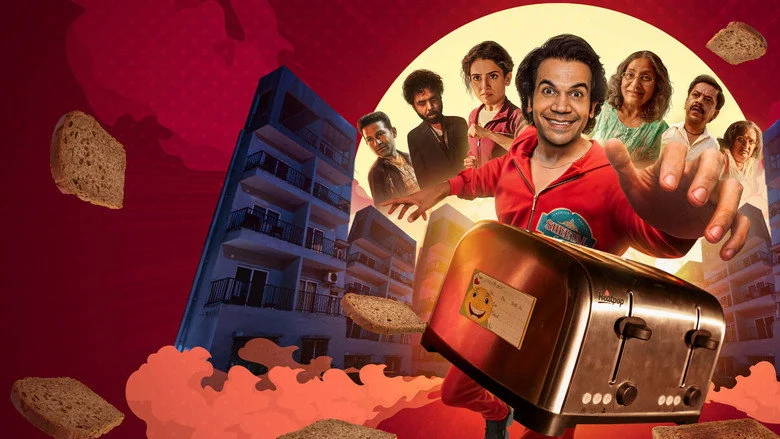
The scene arrives early: Shilpa Parikh places a sleek 4-slice toaster on the kitchen counter, a 4, 999-rupee purchase that her husband Ramakant will never forgive. The appliance gleams like a small silver monument to everything the miserly Ramu despises, and within minutes, the domestic air thickens with the absurdity of a marriage tested by breakfast technology.
What begins as a marital squabble over household economics spirals into theft, an orphanage break-in, and legal pressure, all because one stubborn man refuses to let 4, 999 rupees go. This is the risk-led comedy that director Vivek Daschaudhary sets in motion, and for a while, it works.
Rajkummar Rao’s Physical Precision Makes Stinginess Compelling
Rao plays Ramakant Parikh not as a cartoon miser but as a man whose frugality is a full-body condition. His shoulders tense when money is mentioned; his eyes track the toaster like it is a ticking bomb rather than a kitchen appliance.
The most praised scenes show his control fracturing in real time. When Ramakant demands the toaster back from the bride’s house after the wedding is called off, Rao balances comic frustration with moral self-justification, making the character simultaneously ridiculous and strangely relatable.
His best work happens when the character’s logic collapses inward, and the audience watches a man build elaborate rationalizations for behavior that any sane person would recognize as insane. That tension, between control and collapse, is where the film lives.
Sanya Malhotra Grounds The Absurdity In Domestic Reality
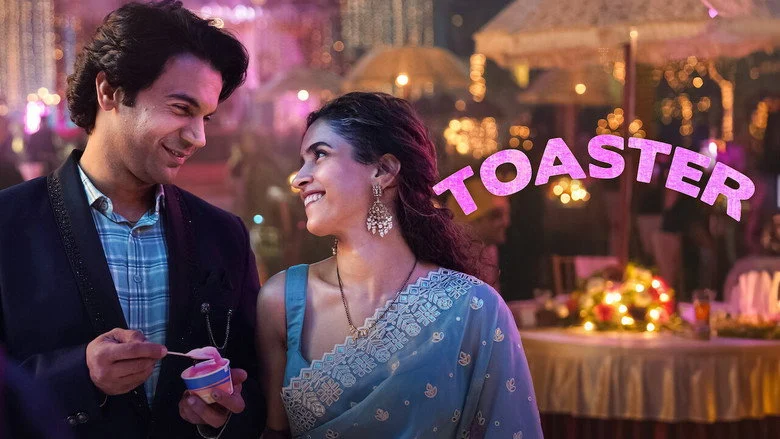
Malhotra’s Shilpa functions as the practical counterweight to Ramakant’s obsession, and her scenes establish the emotional stakes that the comedy depends on. She plays the purchase not as extravagance but as a reaction to years of his extreme frugality, giving the conflict a lived-in marital history.
Her exasperation feels earned rather than performative, and she makes the audience understand why a toaster could become a battlefield. Without her grounding presence, the premise would float away into pure farce.
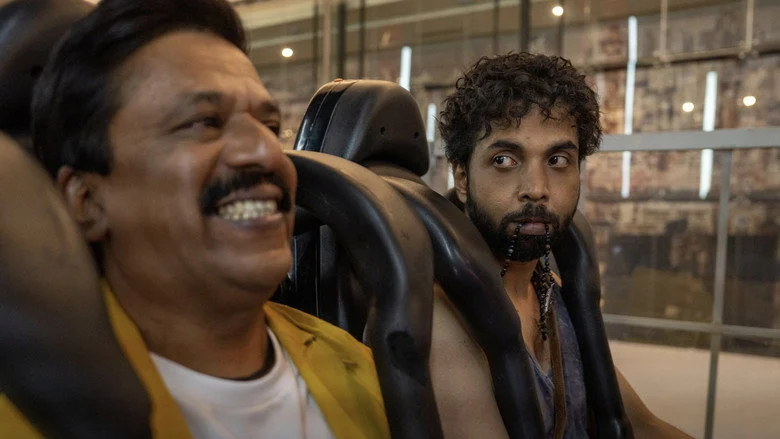
The Black Comedy Setup Is Sharp, But The Thriller Escalation Loses Grip
The film’s primary genre execution works best when it stays close to domestic absurdity. The humor derives from moral extremity rather than punchline-heavy dialogue, and the central object functions as both prop and symbolic trigger for greed, pride, and social pressure.
The mid-film turn toward crime, however, stretches the premise beyond its strongest comic idea. Ramakant breaking into the orphanage after learning the donated wedding gifts were moved there is the moment where the script’s escalation starts to feel designed for complication rather than narrative necessity.
Daschaudhary sustains tonal play between comedy and crime through the first half, but the second half loosens considerably. The investigation and theft threads expand the runtime without adding proportional dramatic weight, and the film’s early efficiency gives way to repetition.
Supporting Cast Adds Texture, Though Several Are Underused
Abhishek Banerjee’s Glenn D’Souza widens the story beyond the couple’s domestic conflict, adding tension and comic friction to the escalating criminal layer. His presence signals the film’s ambition to be more than a two-hander, even if his arc remains thinner than it could be.
Upendra Limaye brings law-and-order pressure as Inspector Balagode, shifting the narrative toward thriller territory whenever the comedy threatens to stall. Archana Puran Singh contributes to the social friction around the wedding chaos, while Seema Pahwa’s D’Souza Aunty and Farah Khan’s Nandini add texture to the ensemble’s chaotic energy.
The casting signals a film that wants to be an ensemble crime comedy in the mold of Ludo or Monica, O My Darling. Yet several of these performers remain underused compared with the lead, and their potential feels partially unrealized by a script that keeps circling back to Ramakant’s obsession.
For viewers who enjoy Hindi films that blend domestic satire with crime, there is plenty to browse on this site’s Hindi Action reviews.
The Political Angle Here Is Domestic, Not National
The film’s controversy, such as it exists, is not political in the electoral sense. The sharper tension is marital and economic, a portrait of a marriage where money has become the third partner, and where a man’s pride attaches itself to objects rather than people.
Audience sentiment largely praises Rao’s comic timing in scenes of frustration and denial, and the concept of building a thriller around a household appliance has clearly struck a chord. The complaints are equally specific: the story becomes repetitive once the toaster hunt dominates, and the humor grows uneven across the second half.
The premise is stronger than the execution, as several viewers have noted, which is the film’s central frustration. The setup is cleanly introduced and escalates from a single domestic irritation into larger chaos, but that escalation loses precision in later sections.
Verdict: A Sharp Premise, A Precise Lead, And A Second Half That Needs More Discipline
Jishnu Bhattacharjee’s cinematography uses ordinary interiors to heighten absurdity, and the controlled framing keeps domestic tension visually coherent. The first half is tighter because it spends less time on complication and more on setup, while the second half’s pacing suffers from the expanded investigation threads.
I found myself checking how much runtime remained during the orphanage sequence, which is never a good sign for a comedy that should be accelerating toward its climax. The film’s strongest asset remains Rao’s controlled performance, and the ensemble adds texture even when the script underuses them.
If you are a fan of Rao’s ability to play ordinary men pushed to extraordinary extremes, this is worth a watch, best experienced on streaming where you can pause and resume. But go in knowing that the first hour is significantly stronger than what follows, and that the film’s ambition occasionally exceeds its discipline.
Toaster is a film with a great idea and a lead performance that nearly sells it, but the script’s escalation lacks the control that its setup promises. For a sharper take on ensemble crime comedy, consider Derby review, which handles its tonal shifts with more confidence. And for another film where a strong central performance anchors a satire that loses grip, TN 2026 verdict offers a similar dynamic.
Rao’s performance earns the ticket, but the film around him settles for 3 out of 5, a comedy that burns bright in its first act and then slowly cools into repetition.
Ankit Jaiswal is the Chief Author, covering Indian cinema and OTT releases with honest, no-filler criticism. An SEO strategist by background, he brings a research-driven approach to film writing, cutting through hype to tell you exactly what's worth your time.