
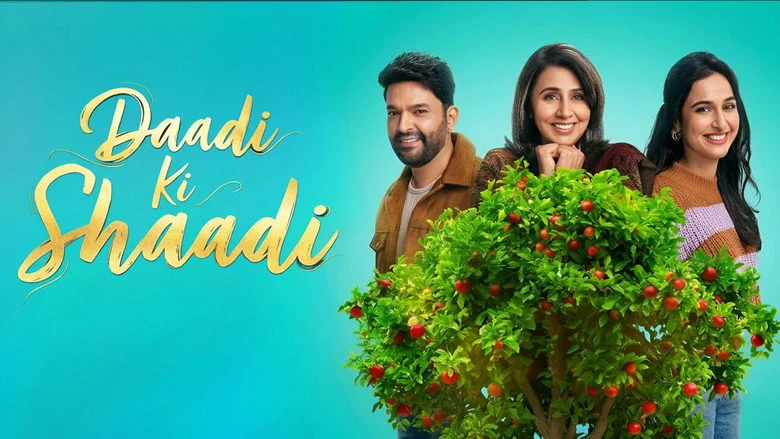
Daadi Ki Shaadi (2026): Neetu Kapoor Anchors a Wobbly Family Comedy



Vimla Ahuja’s face flickers between defiance and hurt as her family debates her right to remarry. Neetu Kapoor holds that frame with the kind of quiet authority that makes the surrounding noise feel like static. She carries Vimla’s loneliness and agency in equal measure, and her confrontation scenes land because she refuses to overplay them.
Kapoor anchors the film whenever the writing wobbles. Her emotional control turns thin material into something watchable, even when the script gives her little to work with beyond the central premise.

Kapil Sharma’s Mediator Act Feels Stuck in Neutral
Tony Kalra enters as the practical fixer, and Kapil Sharma plays him with his usual everyman charm. But the role depends on reacting to family chaos rather than driving it, which leaves him stranded in reaction shots for most of the runtime.
His best moments come when he urges the family to stop fighting and confront what they have ignored for years. Those beats work because Sharma knows how to make exasperation feel human, but the script never gives him a comic setpiece that truly lands.
The Family Drama Works Best When It Stops Joking
The film frames a domestic dispute around elder autonomy, using wedding-related conflict as a pressure device. That choice gives the comedy a socially relevant spine, and the emotional core stays visible even when the humor falters. The mistaken marriage announcement triggers immediate family confusion, and the initial reaction sequence carries genuine comic potential.
But the screenplay leans too heavily on that single hook. The social media mishap is convenient, and several conflict beats escalate for plot convenience rather than character logic. The tonal balance between comedy and drama never settles, leaving stretches where neither mode fully commits.
The later confrontations work better because they force relatives to address emotional neglect directly. Those scenes give the film its dramatic weight, even if the journey there feels padded. A 150-minute runtime stretches material that might have sung at 110.
Supporting Cast Circles a Familiar Family Dynamic
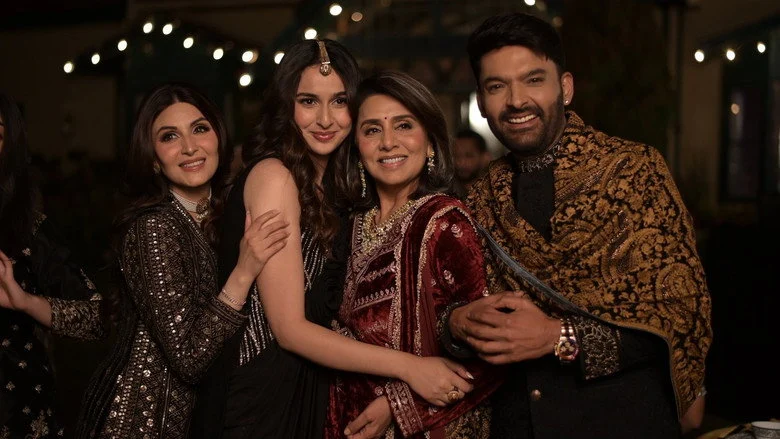
Sadia Khateeb’s Kanika Ahuja sits inside the wedding conflict structure, supporting the intergenerational tension without getting a distinct arc. Her presence signals the film’s intent to examine family pressure from multiple angles, even if the execution stays surface-level.
Riddhima Kapoor Sahni strengthens the ensemble simply by being there, though the available material does not isolate a clear performance beat for her. The casting of R. Sarathkumar, Yograj Singh, and Aditi Mittal suggests a deliberate attempt to build a credible domestic world, and that texture helps the film feel less like a two-hander.
Audience Response and Box Office Reality
The film opened to an India net of ₹0.60 crore, as reported by Navbharat Times, and closed with Koimoi reporting a final India net of ₹7.58 crore and a verdict of Flop. Sacnilk pegged the worldwide gross at ₹8.47 crore, while Bollywood Hungama’s figures differed slightly.
Audiences praised Neetu Kapoor’s screen presence and the family-oriented subject matter, but complaints about predictable progression and weak comic writing dominated the chatter. The premise about companionship in old age drew viewers in, yet the execution could not sustain that interest. I found myself checking the runtime more than once during the second half, which is never a good sign.
For those interested in how this compares to other family dramas, browse more Hindi Drama reviews on the site.
A Verdict That Depends on Your Patience
If you are a fan of Neetu Kapoor, this is worth a streaming watch for her alone. If you need your comedy sharp and your pacing tight, the stretched second half will test you.
Daadi Ki Shaadi earns its emotional moments through Kapoor’s commitment, but the flimsy premise and uneven humor keep it from being more than a decent OTT pick. I rate it 2.5 out of 5, a film that respects its subject more than its craft.
For a tighter look at family dysfunction, check out Licence review.
If you want another take on strained domestic bonds, Chaos Diwali verdict offers a similar dynamic.

Ankit Jaiswal is the Chief Author, covering Indian cinema and OTT releases with honest, no-filler criticism. An SEO strategist by background, he brings a research-driven approach to film writing, cutting through hype to tell you exactly what's worth your time.