

Love Insurance Kompany (2026): Vignesh Shivan’s Futuristic Rom-Com Wrestles with Digital Surrender



A government hospital morphs into a gleaming laboratory. Monorails slice through a neon-lit Chennai skyline. An algorithm decides whether two people should kiss. Vignesh Shivan’s Love Insurance Kompany arrives as a genuine thematic gamble, a rom-com that dares to ask what happens when love itself becomes an app transaction, then struggles to sustain the weight of that question across 150 minutes.
The premise carries real sting. When an app begins actively controlling the characters’ love life, dictating every beat of romance between Vibe Vaasey and Dheema, the film brushes against something uncomfortable: our casual surrender to algorithms. Yet the film spends so much energy warning us about technology that it forgets to tell us a love story worth protecting from machines.

Pradeep Ranganathan’s Vibe Vaasey Carries the Ideological Weight
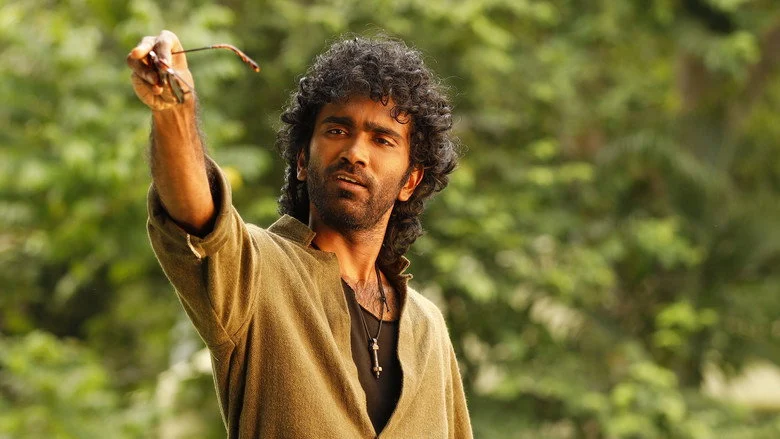
Ranganathan anchors the film’s core conflict, embodying a man who still believes in human spontaneity while everyone else has outsourced their emotions to code. His performance pivots on a simple tension: resistance versus adaptation. The casting signals Shivan wanted someone capable of playing intellectual stubbornness, a character who argues with algorithms through sheer force of presence rather than wit.
Shivan Builds a Visually Coherent 2040 But Loses the Script
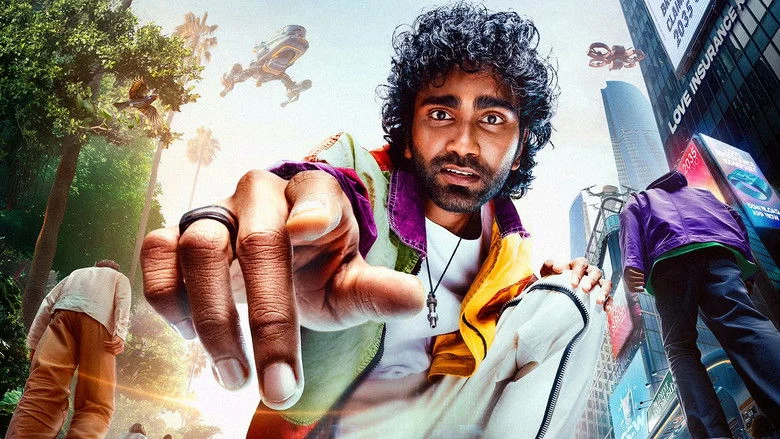
The director demonstrates genuine confidence in world-building. A technologically advanced Chennai featuring monorails, hi-tech hospitals redesigned as hyperconnected labs, and drones moving through skyspace, this is not incidental set dressing. It’s thematic architecture. The screenplay, however, collapses under the weight of its own warnings, leaning so heavily on repetitive technology cautions that the narrative impact dilutes into preaching. A brilliant premise drowns in shallow execution.
Rom-Com Mechanics Suffocate Under Sci-Fi Scaffolding
The opposing approaches of Vaasey and Dheema establish the rom-com conflict cleanly: one trusts human instinct, the other trusts data. Yet the film never resolves whether this tension is dramatically productive or philosophically hollow. Pop culture references scatter through app-controlled love-life scenes with occasional cleverness, but they feel decorative rather than essential to the emotional stakes.
When the app begins dictating every romantic beat, confident writing occasionally surfaces, moments where human emotion briefly outmaneuvers algorithmic logic. These scenes hint at what the film could have been: a sharp satire on emotional automation. Instead, the film treats technology as a monolithic villain rather than examining how ordinary people rationalize surrendering autonomy.
The larger problem resides in tonal incoherence. A rom-com that primarily entertains more than it convinces lacks narrative cohesion. Shivan wants the film to be funny and horrifying and romantic simultaneously, but these registers never achieve synthesis. The result feels expensive and unfocused, an ambitious mess that preaches digital detox while spending its runtime asking audiences to accept increasingly contrived plot mechanics.
SJ Suryah and Seeman Sketch Mechanical Conflict
Suryah’s Suriyan functions as antagonist, embodying the app’s ideology made flesh. His casting positions him as the voice of rational control, a character who has already surrendered to systems and now profits from others doing the same. Seeman, as Anbukadal (Vaasey’s father), represents the older generation watching their children disappear into interfaces, a structural role that suggests thematic intent even if execution remains thin.
Krithi Shetty Navigates Algorithm Romance Without Friction
Dheema’s arc requires Shetty to play someone who trusts the app implicitly, then gradually confronts the cost of that trust. The role demands a performance that shifts from algorithmic certainty toward human doubt, a journey that registers more as narrative instruction than emotional transformation. Her chemistry with Ranganathan hinges on ideological opposition rather than romantic magnetism, which limits the romance at the film’s center.
For those seeking technically ambitious sci-fi rom-com premises, Love Insurance Kompany offers a 2040 Chennai worth inhabiting for its visual design alone. But the screenplay sprawls across its runtime without disciplining its own warnings, transforming satire into sermon. Watch for Shivan’s world-building confidence and the film’s occasional peak moments when the app’s control reaches maximum dramatic tension, though expect the journey between those peaks to feel padded and philosophically repetitive. The theatrical experience may reward the visual scale, but streaming will reveal how much the film relies on spectacle to distract from narrative thinness.
Love Insurance Kompany commits to its futuristic vision without fully committing to the love story trapped inside it, a 2.5 out of 5 film that entertains intermittently but preaches more than it persuades.
Those drawn to clever high-concept rom-com writing may find common ground with Everybody Loves review, which similarly layers genre mechanics with authorial voice.
For comparable examinations of control and performance in speculative registers, Bharathanatyam 2 verdict pursues parallel thematic territory through different formal strategies.

Ankit Jaiswal is the Chief Author, covering Indian cinema and OTT releases with honest, no-filler criticism. An SEO strategist by background, he brings a research-driven approach to film writing, cutting through hype to tell you exactly what's worth your time.