
Mirzapur: The Movie (2026): A 197-Minute Franchise Gamble That Tests Loyalty



The ghats of Mirzapur don’t whisper; they echo with the thud of consequences. When the opening frames reunite us with the Tripathi clan’s blood-soaked throne, the film makes its ambition clear, this is not a continuation, it is a coronation ceremony stretched to a punishing 3 hours and 17 minutes.
Gurmmeet Singh’s big-screen leap for the beloved Prime Video franchise arrives with an A-certificate swagger and a Telugu-dubbed reach, but the question that lingers is whether this is a necessary feature-length saga or an over-extended episode with theatrical pretensions. The answer, like the show’s morality, is complicated.

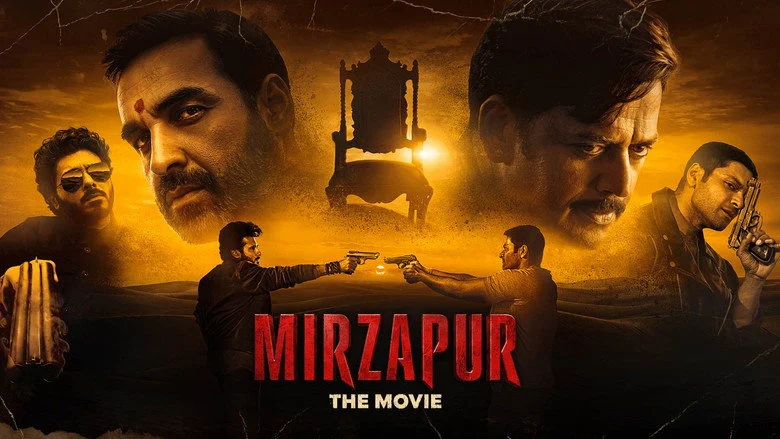
Pankaj Tripathi’s Kaleen Bhaiya Remains the Franchise’s Unshakeable Spine
Tripathi’s return as Akhandanand Tripathi carries the weight of a man who has outlived his enemies by sheer cunning. His measured menace, the way he lets silence do the threatening, anchors a film that risks drifting into chaos without his gravitational pull.
What makes his performance here distinct is the weariness beneath the authority. This is a Kaleen Bhaiya who senses the clock ticking on his empire, and Tripathi plays that mortality with the same precision he once reserved for pure ruthlessness.

Ali Fazal and Divyendu Sharma Wage a War of Succession That Feels Familiar
Fazal’s Guddu Pandit has evolved from rage-fueled avenger to calculating claimant, but the film struggles to give him fresh dramatic terrain. His confrontations with Sharma’s Munna Tripathi crackle with inherited history, yet the screenplay circles back to sibling-rivalry beats that the series already exhausted.
Sharma, returning as the volatile heir, brings a feral unpredictability that the film leans on heavily in its middle stretches. The father-son tension between Tripathi and Sharma remains the franchise’s most reliable engine, when they share frame, the movie justifies its existence.
The Crime-Thriller Machinery Runs on Nostalgia Rather Than Innovation
Singh’s direction prioritizes franchise continuity over narrative reinvention, reassembling the familiar chessboard of Mirzapur’s underworld without introducing genuinely new moves. The long runtime suggests extended conflict escalation, but the structure feels like a season compressed rather than a story reimagined for cinema.
Rasika Dugal’s Beena Tripathi and Shweta Tripathi’s Golu Gupta represent the show’s quiet evolution, women who have learned to play the game on male terms. Their scenes carry the subversive charge that pure action sequences lack, though the film underuses this advantage.
Abhishek Banerjee’s Compounder and Shriya Pilgaonkar’s Sweety Gupta fill the ensemble with reliable texture, but the script gives them functional rather than transformative arcs. Ravi Kishan’s unconfirmed role signals the production’s appetite for expanded mythology, even when the screenplay doesn’t fully earn that expansion.
The A-certificate content delivers the expected bloodletting, though the craft lacks the kinetic specificity that made the series’ violence feel consequential. For a film this long, the action geography needed clearer stakes per set piece, instead, we get competent brutality that rarely surprises.
The 197-minute runtime is the film’s boldest and most questionable choice. It allows character moments to breathe but dilutes the dramatic tension that a tighter edit might have sustained.
Fans arriving with nostalgia for the original characters will find their loyalty rewarded, the ensemble cast return delivers the comfort of familiar faces navigating familiar betrayals. But the film’s failure to justify its feature-length format on its own terms leaves it stranded between television’s serialized depth and cinema’s narrative economy.
For those wanting more of this world, the film offers a serviceable reunion rather than a revelation. I found myself checking the runtime more than once, which is rarely a good sign for a crime thriller that should feel like a bullet, fast, clean, and over before you register the impact.
If you’ve followed the Mirzapur journey from its first episode, this theatrical chapter will satisfy the itch to see these characters on a bigger canvas. Newcomers, however, will find the dense mythology impenetrable and the payoff dependent on homework they haven’t done.
Watch it for Tripathi’s masterful restraint and the sheer pleasure of watching this ensemble share screen space once more. Skip it if you demand your crime sagas justify every minute of your attention.
Mirzapur: The Movie (2026): A 197-Minute Franchise Gamble That Tests Loyalty
Shriya Pilgaonkar and the Supporting Web Hold the Middle Together
Pilgaonkar’s Sweety Gupta arrives with the knowing edge of a character who has learned survival from watching others fail. Her scenes with Shweta Tripathi suggest a sisterhood forged in the series’ fires, though the film doesn’t give their dynamic the space it deserves.
Abhishek Banerjee’s Subodh remains the franchise’s most intriguing wildcard, a man whose loyalty is perpetually negotiable. His presence signals the show’s understanding that power in Mirzapur is never held, only borrowed.
The A-Certificate Politics of Prolonged Violence
The CBFC’s A-certificate is less a warning than a promise, this is adult content unapologetically aimed at the franchise’s mature audience. There’s no political controversy here, but the film’s very existence raises questions about streaming properties migrating to theatrical windows with inflated runtimes.
Audience sentiment skews heavily toward nostalgia, with praise centering on the ensemble cast return and the gangster-drama tone that made the series a phenomenon. Whether that affection survives a nearly three-and-a-half-hour theatrical commitment remains the film’s central bet.
The absence of verified critical consensus leaves this review navigating without a compass, but the available signals suggest a film that will divide even loyal fans. The comparison with the series is inevitable and unflattering, where the show had room to breathe across episodes, this film suffocates under its own ambition.
For a franchise that built its reputation on taut, brutal efficiency, Mirzapur: The Movie opts for sprawl over sharpness. The theatrical format demands a different rhythm, and Singh’s direction never quite finds it.
Go for the performances, stay for the nostalgia, and leave wondering if this needed to be a film at all. Regular theatrical format is the only way to experience it, though impatient viewers may find their phones more compelling than the screen by the second hour.
Mirzapur: The Movie earns a 2.5/5, a competent reunion that mistakes runtime for depth, best appreciated by those already invested in its blood-soaked world. For a sharper take on power struggles with a tighter grip, explore more Hindi crime thriller reviews.
For another look at how franchise loyalty can buckle under tonal clutter, see how Sattendru Maarudhu Vaanilai handles its own narrative sprawl.
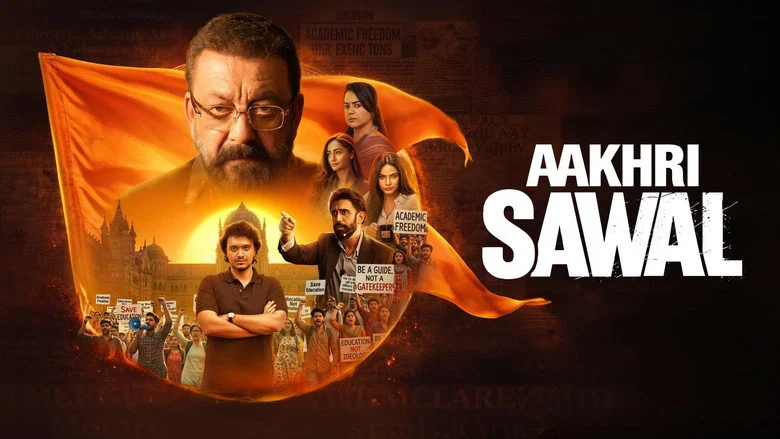
And if you’re curious how a single performance can carry uneven material, Aakhri Sawal offers a contrasting study in restraint.
Readers looking for more hindi thriller reviews can explore them on BollyFlix.

Ankit Jaiswal is the Chief Author, covering Indian cinema and OTT releases with honest, no-filler criticism. An SEO strategist by background, he brings a research-driven approach to film writing, cutting through hype to tell you exactly what's worth your time.