
Neelira (2026): Naveen Chandra Holds Ground in Claustrophobic War Standoff



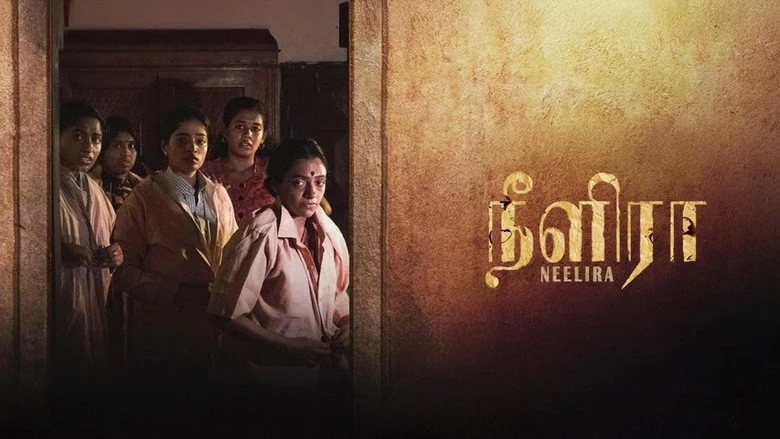
A wedding in Jaffna freezes mid-celebration when eight Indian Army soldiers knock on the door seeking shelter. Within hours, the house transforms into a pressure chamber where a Tamil family, their guests, soldiers, and the unseen threat of LTTE rebels exist in suffocating equilibrium. Someetharan’s debut feature refuses to flinch from this collision of intimacy and violence.
Neelira operates without the reassurance of conventional war cinema. No heroics arrive. No moral clarity emerges. What remains is the particular terror of civilians trapped between institutional forces that see them as either obstacles or targets.

Naveen Chandra’s Captain Makes the Dangerous Call
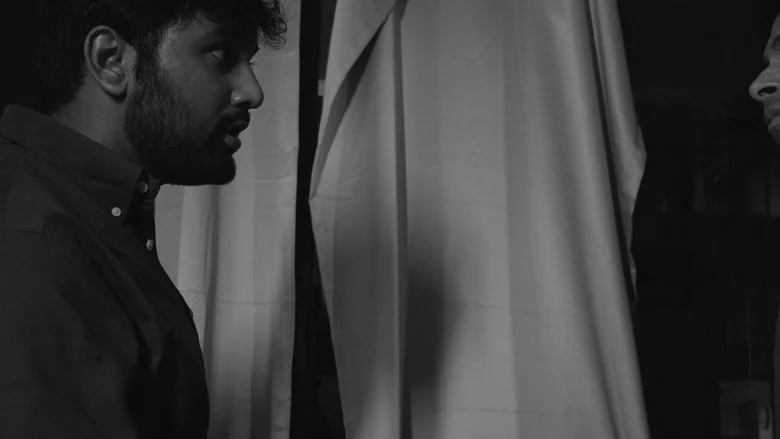
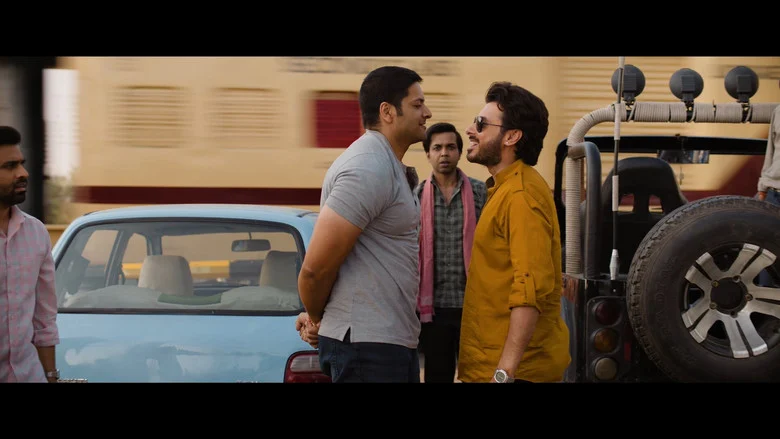
Naveen Chandra carries the film’s central tension through restraint rather than performance flourish. His Captain arrives stern and frantic at the door, a man calculating survival in real time. The decision to fortify the house, to hold the family indefinitely until dawn, becomes the hinge upon which the entire night pivots. Chandra’s performance lives in the micro-expressions of someone weighing impossible choices.
He doesn’t grandstand. This is the film’s greatest strength: the recognition that occupying someone’s home with force demands a certain grim professionalism, not cathartic conflict.
Someetharan’s Intimate Rejection of War-Film Spectacle
The director deliberately abandons operatic gesture for quotidian observation. His childhood experiences shaped this approach, he chooses to linger on the wedding arrangements interrupted, the small rituals of a family suddenly subject to military protocol. Yet this intimacy has cost. Characters’ complex pasts emerge only as fragments, never fully breathing into emotional depth.
The screenplay’s linear structure, one night, one location, builds claustrophobic tension authentically. The weakness lies in how quickly it sketches psychological terrain without allowing excavation.
The Chamber Holds Its Breath Without Explosions
Neelira functions as hostage drama stripped of spectacle. The tension derives from proximity and competing survival logics rather than combat choreography. After radio confirmation traps the soldiers until dawn, the house becomes a fortified cell where family, soldiers, and the implicit LTTE threat create a three-way morass nobody controls entirely.
The film’s craft centers on civilian perspective within war’s machinery. It focuses on the small humiliations and calculations that populate siege scenarios: constant vigilance, disrupted ritual, the contamination of home space by state force. These details anchor the thriller’s emotional register without melodrama.
What prevents deeper resonance is the runtime’s constraint. At approximately ninety minutes to two hours depending on source, the film surfaces complex histories without excavating their emotional weight. The final scene pivots away from soldiers and rebels toward civilian consciousness, a directorial choice that signals intent, yet the architecture doesn’t fully sustain the shift.
Roopa Koduvayur’s Vasuki Bears the Film’s Moral Center
Roopa Koduvayur embodies the bride whose wedding becomes a hostage scenario. She carries not rage but a particular kind of exhaustion, the knowledge that her family’s home has been conscripted by forces claiming to protect them. Her scenes anchor the film’s assertion that civilians possess dignity even under siege.
The supporting ensemble of soldiers and family members portrays constant vigilance without hysteria, suggesting lives already shaped by occupation and threat.
The Film Refuses Easy Villainy, Which Is Both Its Strength and Risk
Neelira presents no clear heroes or villains. The Captain isn’t a tyrant; he’s a soldier executing orders in an impossible geography. The LTTE remains largely unseen, a threat felt through radio signals and tactical awareness rather than confrontation. This refusal to simplify complicates easy viewing.
ETimes noted that “the best hostage films don’t need explosions. They need a room, a locked door, and people who can’t afford to blink”, and Neelira understands this principle viscerally. New Indian Express observed the film’s “impeccable storytelling, never exploiting the emotional weightage of its subject, ” a restraint that signals artistic maturity and political awareness simultaneously.
Critics rated the film 3.5 stars at ETimes and 3 stars at NDTV, citing its “minimalistic chamber piece with real grit” while acknowledging that characters’ complex pasts remain fragmentary rather than fully realized. The tension between artistic intention and structural limitation defines the viewing experience.
For class audiences drawn to anti-war cinema that resists spectacle and sentimentality, Neelira offers genuine discomfort. Those seeking action-driven war narratives should look elsewhere. The film demands patience with ambiguity and silence.
Viewers interested in how Tamil cinema engages Sri Lankan conflict might explore related chamber dramas that challenge national mythologies through intimate domestic space.
Tamil Drama reviews on this site examine films that prioritize civilian perspective within political violence.
Neelira works best in theatrical exhibition, where the single-location tension and minimalist sound design register with full force. The film trusts viewers to sit with moral ambiguity and understated performances, a risk that occasionally pays off, occasionally doesn’t.
Watch Neelira if you prize artistic restraint over emotional catharsis in war cinema; it’s a deliberately modest film that refuses easier narratives, earning a respectable 3.5 out of 5 for its commitment to uncomfortable complexity.
Manithan Deivamagalam review like Manithan Deivamagalam share Neelira’s interest in small-scale tension over spectacle.
Leader verdict in Leader similarly examine how authority figures calculate survival under pressure.

Ankit Jaiswal is the Chief Author, covering Indian cinema and OTT releases with honest, no-filler criticism. An SEO strategist by background, he brings a research-driven approach to film writing, cutting through hype to tell you exactly what's worth your time.