
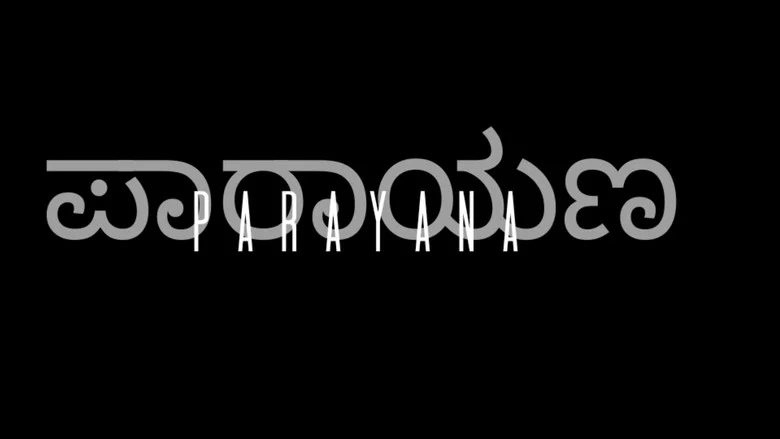
PARAYANA (2026): A 10-Minute Drama That Packs More Questions Than Answers



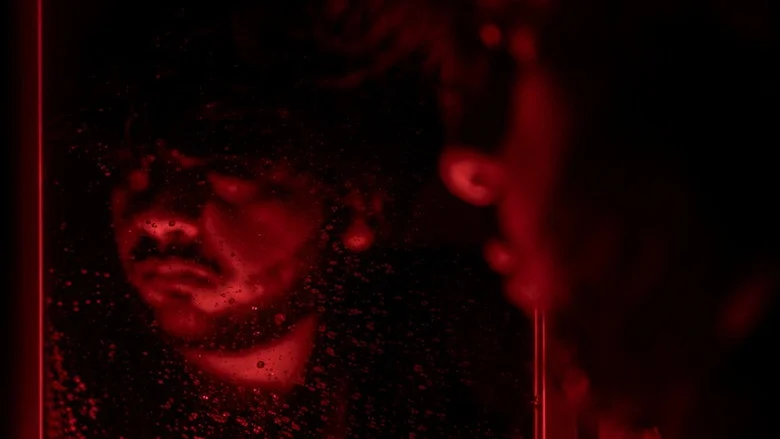
Ten minutes. That is all Girish V’s Parayana has to establish its world, and it opens with a quiet restlessness, Chandrakanth M. and Nandish Krishna occupying frames that feel deliberately unhurried, as if the film itself is holding its breath. What follows is less a narrative than a fragment, an atmospheric sketch of lives brushing against each other without quite connecting.
For a drama this compressed, the casting of six leads signals ambition beyond the runtime. The film is an experiment in ellipsis, what remains when you strip away exposition and let actors carry meaning through presence alone.

Chandrakanth M. and Nandish Krishna: Two Registers of Restraint
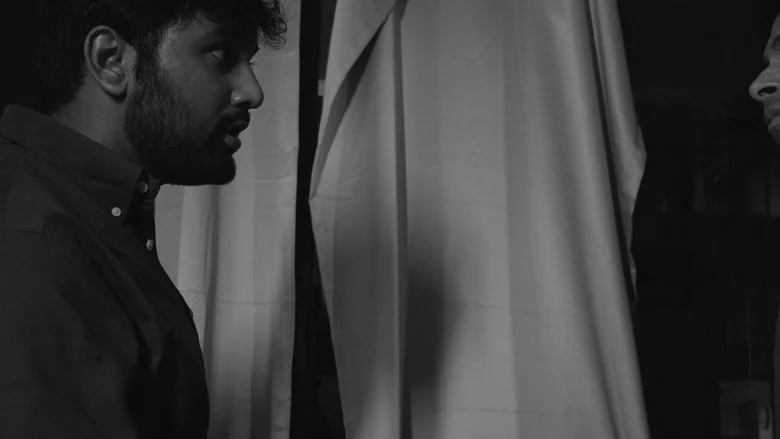
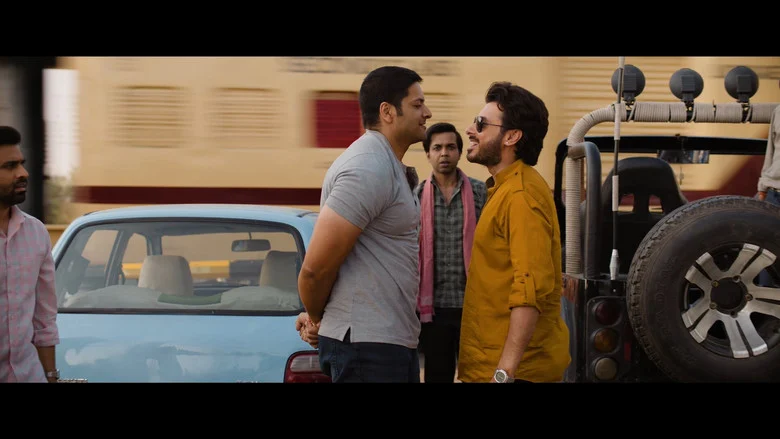
Chandrakanth M. brings a simmering interiority that suits the film’s elliptical style. He does not perform the drama so much as inhabit its silences, letting gestures do the work of dialogue. Nandish Krishna, by contrast, offers a more externalized counterpart, his energy creates friction against Chandrakanth’s stillness, which is where the film’s quiet tension lives.
Their scenes together suggest a dynamic that a longer runtime could have developed into something genuinely compelling. As it stands, we get fragments of a relationship rather than a full portrait.
Girish V’s Direction: Atmosphere Over Narrative
As both director and lead actor, Girish V takes on a dual burden that proves instructive. His direction favors mood over plot, trusting that atmosphere can substitute for story momentum in a short format. The strength here is tonal consistency, Parayana never feels tonally confused, even when its intentions remain opaque.
The flaw is equally clear: the screenplay does not give its performers enough dramatic events to anchor their emotional work. A 10-minute runtime demands economy, but economy here tips into sparseness.
Genre-Core Execution: Drama in Miniature
Drama as a genre depends on conflict, stakes, and transformation, all of which require time to develop organically. Parayana’s compressed format means its conflicts register as suggestions rather than fully realized confrontations. The film gestures toward emotional turning points but rarely commits to dramatizing them in full.
What works within these constraints is the film’s refusal to overstate its case. There is no melodramatic scoring or theatrical delivery, the drama stays internal, played out across faces and pauses rather than speeches. That restraint is admirable even when it frustrates.
The result is a piece that feels like a prologue to a larger story rather than a self-contained work. For viewers attuned to short-form experimentation, that incompleteness may read as intentional artistry. For others, it will feel like a trailer without a feature.
For more independent experiments in regional cinema, browse our Telugu drama reviews to see how other filmmakers tackle similar constraints.
Saanvi DM, Sai Surabhi, and Hamsa: The Underwritten Feminine
Saanvi DM and Sai Surabhi both bring a grounded quality to their brief appearances, suggesting characters with histories we never access. Their casting implies a larger ensemble drama that the runtime cannot accommodate, a structural mismatch that hurts the film’s completeness.
Hamsa’s presence adds another layer of unfulfilled potential. Each female performer registers distinctly, yet none receives enough screen time to build a character arc. The film’s gender dynamics remain unexplored territory, which feels like a missed opportunity given the cast assembled.
The casting choices signal a director interested in ensemble dynamics, but Parayana’s brevity works against that ambition at every turn.
Audience Reception: A Rorschach Test in Short Form
Without extensive critical consensus or box office data to contextualize the film’s reception, Parayana exists in a curious limbo, available, brief, and open to interpretation. Its 10-minute runtime makes it an easy watch for curious viewers, yet that same brevity limits its capacity to generate word-of-mouth momentum.
The film’s audience will likely split between those who admire its restraint and those who find it underwritten. I find myself in the former camp, though with reservations, the craft is evident, but the content feels stretched thin across too many characters.
For viewers who appreciate micro-budget experiments and the texture of independent Kannada cinema, Parayana offers a fleeting glimpse of a filmmaker’s sensibility worth tracking. Watch it as a calling card, not a complete statement.
If the elliptical style and ensemble ambitions of Parayana intrigue you, the fragmented storytelling in Godari Gattupaina review explores similar territory with a longer runway.
Parayana earns a modest 2.5 out of 5, an intriguing fragment that showcases directorial instinct but never becomes the film it hints at being.
For more short-form experiments with similar structural ambitions, Dridam verdict offers another angle on compressed storytelling.

Ankit Jaiswal is the Chief Author, covering Indian cinema and OTT releases with honest, no-filler criticism. An SEO strategist by background, he brings a research-driven approach to film writing, cutting through hype to tell you exactly what's worth your time.