
System (2026): Sonakshi Sinha Finally lands hard though the screenplay stays patchy



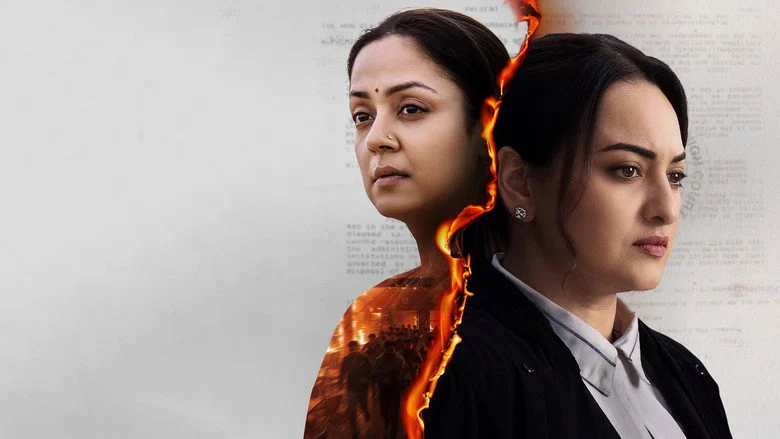
The courtroom exchanges between Neha Rajvansh and Sarika Rawat crackle with a quiet intensity that most mainstream legal dramas miss entirely. Two women, separated by class and privilege, face each other across a procedural battleground where the real contest is not guilt or innocence but who gets to define the truth.

Sonakshi Sinha Finally Gets a Role That Demands More Than Star Presence
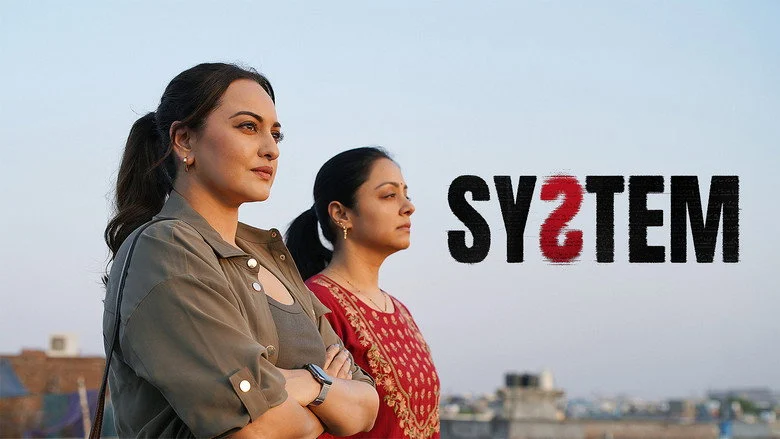
Sinha anchors System as Neha Rajvansh, a public prosecutor whose privileged world collides with a case that forces her to question the machinery she serves. She carries the courtroom scenes with a controlled ferocity that suggests she has been waiting for material this substantial.
What impresses is how Sinha modulates between professional confidence and private doubt. The film’s central confrontation between her and Jyotika gives both actresses room to breathe, and Sinha makes every exchange count.
Jyotika’s Restraint Creates the Film’s Emotional Counterweight
Jyotika, as stenographer Sarika Rawat, provides the moral gravity that keeps System from floating into abstraction. Her performance is built on stillness and observation, a smart counterpoint to Sinha’s more outward conflict.
There is a particular moment where Sarika’s quiet response to courtroom condescension says more than any dialogue could. Jyotika understands that in a film about institutional power, the most potent resistance is often silent.
The Genre Problem: Nuance Comes at the Cost of Tension
System positions itself as a courtroom drama in the tradition of Pink and Jolly LLB, but it makes a deliberate choice to prioritize character dynamics over suspense. The cross-examination sequences are built on ideological friction rather than procedural fireworks, which works when the writing is sharp.
Director Ashwiny Iyer Tiwari frames the legal setting as a stage for class conflict, using the courtroom as a microcosm of broader social hierarchies. The father-daughter dynamic between Neha and Ashutosh Gowariker’s Ravi Rajvansh adds a familial layer that complicates the central moral question.
The problem emerges in the later stretches where the case logic turns convenient. The film’s refusal to embrace thriller conventions is admirable, but the screenplay’s reliance on easy resolutions dilutes the very complexity it spends its first half building. Bollywood Hungama’s 3/5 rating captures this ambivalence accurately.
For more analysis of similar character-driven legal dramas, browse more Hindi Thriller reviews.
Ashutosh Gowariker and the Supporting Cast Serve the Film’s Moral Architecture
Gowariker brings a weathered authority to Ravi Rajvansh, making the family conflict feel like a natural extension of the institutional critique. His presence strengthens the film’s argument that justice is shaped by who you know as much as what you prove.
Vijayant Kohli as antagonist Vikram Bajral functions as the visible opposition, though the role is underwritten compared to the female leads. Adinath Kothare and Sayandeep Sengupta round out the supporting cast with professional efficiency, though neither gets material that matches the film’s ambitions.
A Social Drama That Refuses the Easy Outrage of a Thriller
System has drawn no significant controversy, which is itself notable for a film about institutional power. Instead, the conversation has centered on whether its measured approach reads as maturity or sluggishness.
The critical consensus, captured in one review, holds that System “is not an edge-of-the-seat thriller, but a more nuanced take on justice.” Another critic noted the film “works due to its drama, the dynamics between the characters and the performances, ” even as “the writing gets too convenient after a point.”
This is a film that will frustrate viewers expecting high-stakes legal maneuvering. It rewards those willing to engage with its slower, more reflective examination of how the system processes truth.
For those who appreciate Tiwari’s character-first approach, her handling of institutional pressure echoes the discomfort explored in Ugly Story review.
System is best experienced as a performance-driven drama rather than a legal puzzle. Watch it for Sinha and Jyotika’s exchanges, accept the convenient writing as a flaw, and you will find a film that asks better questions than most courtroom entertainments dare to pose. The regular theatrical or OTT format serves it fine, since the craft is functional rather than spectacular.
System earns a respectable 3 out of 5 for its performances and thematic seriousness, even if its screenplay lacks the rigour its subject demands.
For another uneven but ambitious drama that prioritizes character over craft, consider Athiradi verdict.

Ankit Jaiswal is the Chief Author, covering Indian cinema and OTT releases with honest, no-filler criticism. An SEO strategist by background, he brings a research-driven approach to film writing, cutting through hype to tell you exactly what's worth your time.