
Youth (2026): Ken Karunas Anchors gives the film energy despite weak payoffs



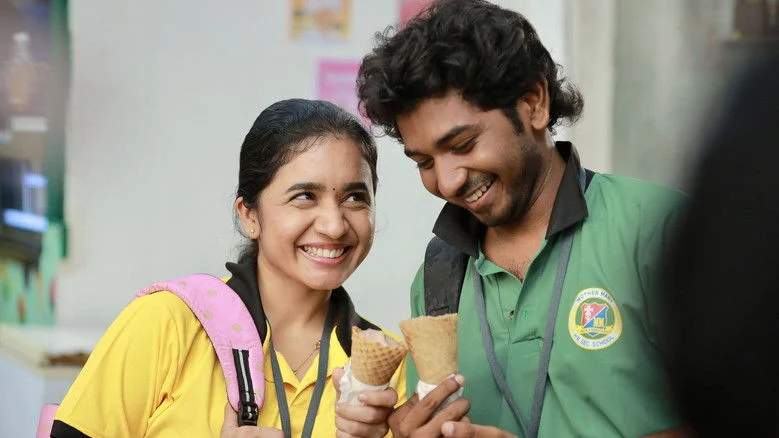
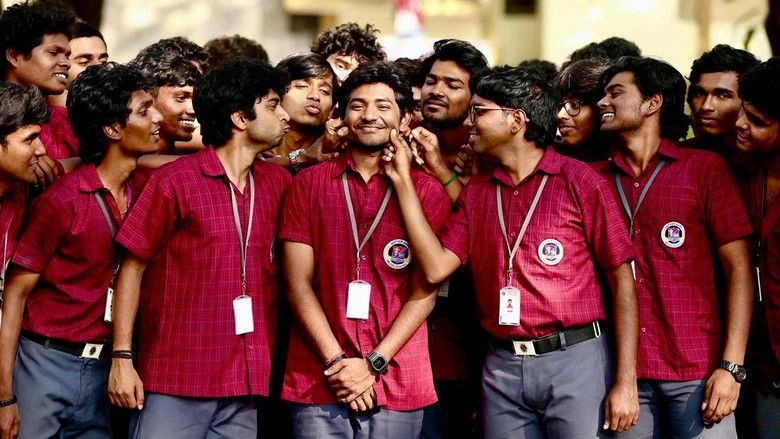
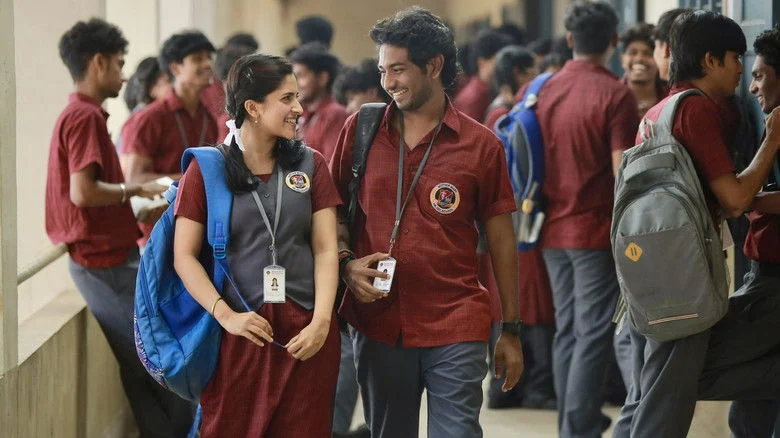
Praveen flirts his way through 11th standard with the casual indifference of someone who believes charm and confession speeches matter more than algebra. By the annual day dance, his duplicity catches up, Preshika discovers his banter with Sonal mid-performance, a collision of romantic incompetence staged with all the earnestness of a school talent show. Ken Karunas’s directorial debut arrives confident in its ability to mine emotional gravity from the familiar wreckage of adolescent irresponsibility, though it rarely ventures beyond the well-worn machinery of coming-of-age comedy.

Ken Karunas Anchors Praveen’s Arcs with Physical Ease
As Praveen, Karunas carries the film’s central paradox, a young man who transitions from carefree romantic pursuit to studious maturity without ever fully convincing us the journey was necessary. His body language and thought processes echo STR influences in how he courts multiple crushes, all broad gestures and confident half-smiles. By the third act, when Kanaga challenges him to crack 12th rank as proof of reformed character, he recalibrates into earnestness with enough sincerity to make the shift land emotionally.
Directorial Simplicity Trades Complexity for Broad Strokes
Karunas shows genuine strength in the third act’s tonal pivot, the family crisis moment when his mother suffers a heart attack carries weight precisely because he refuses melodrama, instead trusting subtle behavioral shifts to signal growth. His screenplay takes the more problematic route elsewhere, relying on high school comedy clichés recycled for decades without interrogating what makes them resonate beyond nostalgia. The linear structure from 10th board results through 12th rank completion feels inevitable rather than earned, predictable not by complexity but by template.
Coming-of-Age Romance Executed as Familiar Routine
The multiple crushes and breakups, Preshika’s cop-father warning, Sonal’s revenge proposal via friend request, the canteen confession scene, operate as checklist items within romantic comedy rather than character revelations. These moments capture the texture of adolescent romance authentically enough, but the film treats them as decoration rather than consequence. School dances, rival fights with Siddarth’s gang, and principal-office trouble arrive exactly when genre convention demands, never surprising in their arrival or execution.
Growth from irresponsible playboy to 9th-rank achiever traces the coming-of-age arc with mechanical precision. Kanaga’s challenge, ace your exams and earn my love, reduces romance and academic maturity to a transactional formula, yet the film plays this as earned character development rather than romantic manipulation. By the climax, Praveen’s reformation feels less like internal reckoning and more like external pressure finally breaking through his indifference.
The third-act family dynamics inject genuine drama into what might otherwise be pure rom-com whimsy. His father’s rejection, his mother’s desperation, and the sudden gravity of consequence create emotional texture the earlier acts squander on teenage melodrama. This tonal shift proves the film’s one true structural accomplishment, the recognition that adolescent mistakes ripple outward.
Supporting Cast Elevates Tired Family Scenarios
Devadarshini as Saroja, Praveen’s mother, carries the emotional core with understated pleading that culminates in her heart attack, a moment the film trusts to play quietly rather than overdramatizing. Suraj Venjaramoodu’s strict father persona gains teeth through his refusal to forgive, a rejection that stings because paternal coldness rarely receives such patient screen time. Meenakshi Dinesh’s Preshika registers the film’s moral confusion most clearly, warned by her cop father, she confesses love anyway, then feels betrayed at the annual day dance, a victim of Praveen’s selfishness who the narrative never quite holds him accountable for.
Stalking and Casual Cruelty Sour the Charm
The research notes audience complaints about stalking, racist elements, body shaming, and manipulation, tonal textures the film treats as boy-meets-girl comedy rather than behavioral red flags. Sonal’s revenge proposal and Praveen’s serial deception operate under the assumption that persistence equals romance, a framework the narrative endorses through its happy resolution. These elements corrode the emotional goodwill the third act generates, leaving the film’s final message morally muddled, that love conquers all, so long as the boy eventually studies hard enough.
For family audiences seeking relatable parent-child dynamics and school-life awkwardness captured with genuine affection, Youth delivers entertainment rooted in authentic casting and middle-class recognition. The performances by Devadarshini and Venjaramoodu ground the melodrama in earned emotion rather than contrivance. However, viewers seeking originality will find only predictable beats executed with competence, Karunas demonstrates directorial control without vision, technical skill without risk.
Watch this on a regular theatre release if you need comfort-food cinema about growing up, but temper expectations for anything beyond relatable messaging in a familiar wrapper. The film succeeds most when it abandons romance entirely and focuses on family collapse and recovery.
Youth earns its emotional moments through Devadarshini and Venjaramoodu’s understated performances, though the screenplay trades originality for accessibility, a solid 2.5 out of 5 that satisfies family audiences while leaving cinephiles unmoved.
Vignesh Shivan’s Love Insurance review similarly wrestles with romantic formula, though it at least interrogates the digital age’s role in modern courtship.
Rajat Kapoor’s Everybody Loves verdict also mines character growth through unconventional narrative choices rather than predictable arcs.

Ankit Jaiswal is the Chief Author, covering Indian cinema and OTT releases with honest, no-filler criticism. An SEO strategist by background, he brings a research-driven approach to film writing, cutting through hype to tell you exactly what's worth your time.