

Aadharam: Murali s Restraint lifts key stretches, not the full runtime



Bapputty walks back into a world that has decided who he is before he can even speak. The year is 1992, and Malayalam cinema is about to add another chapter to its long conversation with social drama, this time through George Kithu’s Aadharam, a film that understands the weight of a man trying to carry his own name after prison has stripped it from him.

Murali’s Restraint Becomes the Film’s Moral Centre
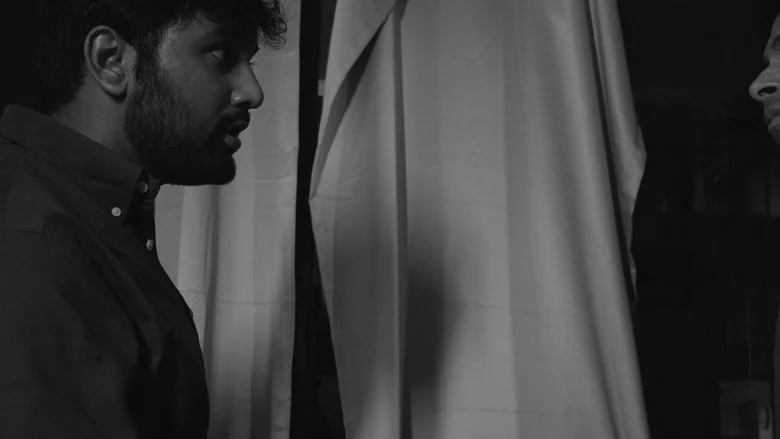
Murali’s Bapputty is not the kind of performance that announces itself. He works through quiet reactions, lowered eyes, and a body that seems to remember the confines of a cell even when the camera places him in open spaces. The post-prison re-entry scenes carry the entire film, and Murali makes every glance of suspicion from neighbours feel like a physical blow.
What impresses is how he refuses the easy route of explosive catharsis. Even in the confrontational emotional exchanges, he holds something back, and that restraint is precisely what makes the redemption arc land with such force.
Lohithadas’s Writing Gives the Drama Its Bones
A.K. Lohithadas, who would go on to define Malayalam social drama for a generation, builds Aadharam on a linear structure that never loses sight of its central question: can a man reclaim dignity after society has written him off? The screenplay’s strength is its refusal to manufacture a single villain; the opposition here is diffuse, institutional, and all the more oppressive for it.
But the writing also shows its limits. The middle section leans heavily on dialogue-heavy exchanges that can feel stage-like, and the measured pace that suits the subject occasionally tips into sluggishness. Some stretches demand patience that modern viewers may not be willing to extend.
Genre Execution: Drama That Trusts Its Silence
Aadharam is a drama first and everything else second. There is no action setpiece, no thriller mechanics, no comic relief to break the tension. The film generates its conflict entirely through interpersonal friction, the way a community closes ranks against an outsider, the way family ties strain under public judgment, the way hope becomes a luxury.
The scene of Bapputty’s return to ordinary life is the film’s quietest and most devastating sequence. There is no dramatic score, no slow-motion heroism, just a man re-entering a society that has already convicted him. It is a scene that trusts the audience to feel the weight of what is not being said.
The emotional confrontations that follow maintain this discipline. The film frames rehabilitation not as a personal project but as a social one, and that insistence on collective responsibility gives the drama its moral specificity. It may not dazzle, but it lingers.
The Supporting Cast Builds a World Around the Lead
Suresh Gopi, in an early career role, provides the interpersonal friction that shapes Bapputty’s struggle. His Vasu exists as a counterweight to the lead’s vulnerability, and the dynamic between the two actors gives the film its dramatic tension. Geetha’s Sethulakshmi grounds the narrative in emotional intimacy, offering the kind of warmth that makes the harsher social realities feel more acute.
Mamukkoya’s Kunjappu adds texture to the community setting, and his presence helps vary the film’s emotional register. The casting signals a clear intent: this is a film that wants its world to feel lived-in, populated by characters who exist beyond the lead’s arc.
Audience Reception and the Film’s Place in Malayalam Cinema
The film holds a 7.2/10 on IMDb from 56 votes, a modest but telling sample that suggests those who found it, found it deeply. Comparisons with Kireedam are inevitable, given the shared social-drama DNA, but Aadharam distinguishes itself by keeping its focus tightly on post-prison rehabilitation rather than broader family tragedy.
What it lacks is the critical discourse that surrounds the major Malayalam classics. It is less referenced for technical innovation and more for its thematic sincerity. That may be its fate: a film respected for its intentions, admired for its lead performance, but never quite elevated to the canon.
For those who treasure performance-driven Malayalam drama, this is a find. For those who need narrative momentum, it will test patience. I found myself wishing the middle section trusted its images as much as its dialogue.
Watch it for Murali, who turns a quiet performance into a powerful argument for the dignity of the forgotten. Aadharam earns a solid 3.5 out of 5, a film that understands that redemption is never a solitary act.
Explore more Tamil Thriller reviews for similar cinematic discoveries.
For another take on flawed protagonists navigating social expectations, revisit Bad Boy review.
And if you prefer your social commentary with sharper genre teeth, Rage verdict delivers a different kind of bite.

Ankit Jaiswal is the Chief Author, covering Indian cinema and OTT releases with honest, no-filler criticism. An SEO strategist by background, he brings a research-driven approach to film writing, cutting through hype to tell you exactly what's worth your time.