
KD – The Devil (2026): Dhruva Sarja’s Craft Overwhelmed by Spectacle Over Substance



Kaalidasa begins as a naive, light-hearted young man tethered to family obligation and admiration for an underworld don, until the crime world bleeds into his home. Within minutes, director Prem’s 141-minute action thriller pivots from modest domestic comedy into escalating violence and betrayal, asking whether loyalty to blood can survive loyalty to an idol.
What emerges is a film caught between two ambitions: a character study of transformation and a mass-action spectacle. The construction is sound in theory; the execution, repetitive critics noted across available reviews, buckles under its own noise. This is a Kannada period-crime drama with a 2.5-star critical consensus, technically assembled but narratively strangled by formula and excess.

Dhruva Sarja’s Shift From Jolly to Broken Forecloses Subtlety
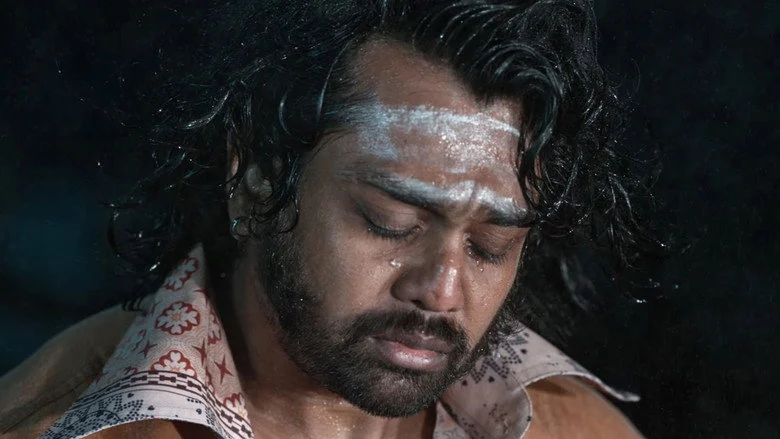
Sarja anchors the film’s central arc: Kaali moves from bumbling ordinariness into underworld complicity. The early scenes establish him as a character with clear trajectory potential. Yet reviewers observed that his performance leans hard on screen presence and elevation moments rather than the modulation required for genuine transformation.
The film asks its lead to carry both comedic setup and violent climax, but the gap between these registers feels wider than Sarja’s performance can bridge. Spectacle substitutes for psychological depth at precisely the moment the character should fracture most convincingly.
Prem’s Direction Builds Emotional Spine But Loses Structural Discipline
Director Prem establishes a clear emotional axis: the brother-sentiment thread between Kaali and Dharma anchors the narrative better than mother-sentiment clichés typically do. The period-crime Bengaluru setting provides recognizable visual geography. Yet critics consistently cited narrative control as the film’s principal casualty, style and spectacle override coherence repeatedly, especially in the overstretched second half.
The screenplay, written by Prem alongside Kraanti Kumar and Vijay Eshwar, follows a linear progression from ordinary life into criminal escalation. The structure is predictable. Where it falters most visibly: the transition from love-story material into underworld confrontation happens abruptly, as though miscommunication and external threat do the dramatic work rather than character agency.
Action and Underworld Escalation Arrive Packaged, Not Earned
The primary genre, action thriller, depends on building suspense through family threat rather than procedural logic. Kaali’s turn happens after Dhak Deva menaces his household, converting personal drama into action-drama stakes. This is structurally sensible but narratively familiar. The shift from personal concerns into criminal identity should read as seismic; instead, it reads as inevitable.
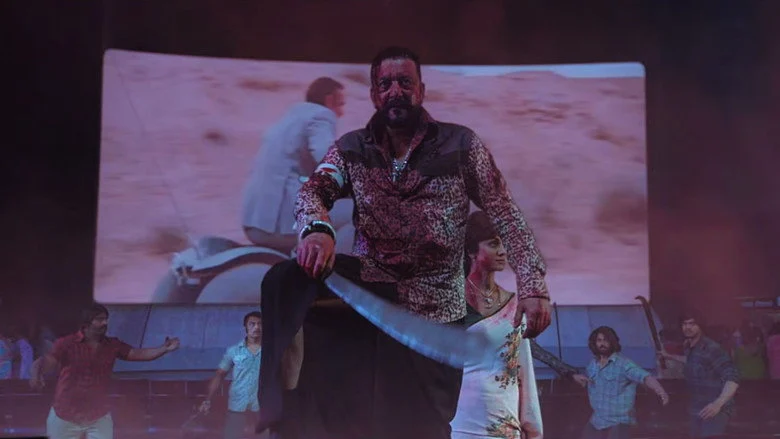
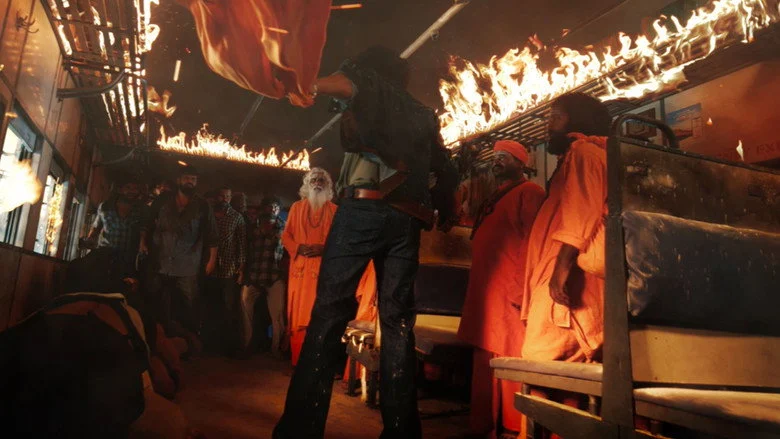
Individual confrontation moments deliver entertainment value for mass audiences, Sarja’s presence in these scenes carries a certain kinetic appeal. Yet the violence accumulates rather than builds. Critics noted that loud, messy action-drama handling overwhelms tonal discipline. The period setting shapes atmosphere more than it grounds realism; the effect is kitschy rather than immersive, a mix of gritty underworld imagery and spectacular but hollow spectacle.
The brother-versus-idol dynamic, positioned as the film’s emotional core, converts what could have been character conflict into action-drama scaffolding. Available sources do not detail specific action choreography or stunt geography with precision, but critics repeatedly flagged that escalation feels bloated rather than inevitable. The 141-minute runtime exacerbates this: pacing issues compound across the second half, where crowded narrative design and excessive violence obscure whatever emotional clarity the first act established.
For more Kannada film analysis, explore our Kannada Thriller reviews and critical breakdowns of regional cinema craft.
Ramesh Aravind and Reeshma Nanaiah Ground What Spectacle Threatens to Erase
Ramesh Aravind, as Dharma, functions as the principal emotional counterweight to Kaali. His strict-brother archetype could easily collapse into cliché, yet reviewers noted the family-conflict setup gains credibility through his restraint. He anchors scenes that might otherwise drown in mass-cinema excess. Sudeepa arrives as a cameo insertion, star value deployed for momentary mass-appeal rather than plot expansion, a choice that signals the film’s awareness of its own spectacle-over-substance positioning.
Reeshma Nanaiah’s Lakshmi/Macchu Lakshmi provides the romantic thread intersecting with crime plot mechanics. As the outspoken love interest, she represents the civilian world Kaali abandons. She functions as emotional stakes more than fully realized character, a limitation the film seems aware of but unwilling to address. Sanjay Dutt’s Dhak Deva trades layered villainy for threat and dominance, a don constructed from fear rather than psychology, which suits the mass-action register but undermines thriller tension.
Loud, Unfocused Spectacle Mirrors Kaali’s Descent Into Noise
The film’s central irony: Kaali’s narrative descent into violence mirrors the film’s own descent into uncontrolled spectacle. Where earlier scenes suggest psychological fracture, later ones substitute explosive setpieces for character clarity. Available sources cite excessive noise, violence, and cluttered design as primary audience complaints, not moral objections, but structural ones.
Critics across available consensus marked this as a film that understands mass-cinema mechanics but lacks discipline to execute them coherently. The A certificate and 141-minute span invite comparison to prestige crime dramas, yet the handling never achieves the tonal command such length demands. The formula, ordinary person into underworld, family conflict, escalating violence, identity transformation, arrives fully assembled, executed competently but without surprise or depth.
If you value character-driven Kannada cinema, Krishnavataram Part review manages similar territory with tighter control.
KD: The Devil works best as a mass-action vehicle for Kannada audiences primed for Dhruva Sarja’s screen presence and elevating moments. The film delivers those consistently. What it sacrifices, narrative coherence, character modulation, tonal discipline, will frustrate viewers seeking thriller intelligence or drama substance. Watch it in theaters for the scale; stream it if spectacle alone suffices. This is competent craft in service of excess rather than excellence, entertaining for its target audience but undisciplined for critics expecting craft to justify 141 minutes of underworld tumult.
KD: The Devil arrives as an action spectacle that mistakes noise for impact, earning a 2.5 out of 5 for spectacular surfaces undermined by narrative indiscipline.
Like Paavakoothu verdict, this film understands its audience’s appetite but struggles to balance spectacle with emotional coherence.

Ankit Jaiswal is the Chief Author, covering Indian cinema and OTT releases with honest, no-filler criticism. An SEO strategist by background, he brings a research-driven approach to film writing, cutting through hype to tell you exactly what's worth your time.