

Michael (2026): Fuqua’s Performance Genealogy Over Psychological Depth



Michael Jackson’s young hands grip the microphone at a Motown studio session, and the camera lingers on the exact moment a child’s voice becomes a commodity. Antoine Fuqua’s *Michael* treats this threshold, the shift from family act to industry product, as its gravitational center, building outward through Jackson 5 harmonies and early solo stages rather than inward through the private fractures that would define the man’s later decades.
The film arrives as a carefully curated career ascent rather than a life examined whole. Its scope halts at the Bad World Tour threshold, sidestepping the legal firestorms and cultural reckonings that would complicate any serious reckoning with Jackson’s full biography. What remains is a competent, narrowly focused biopic that executes its chosen territory with craft precision but surrenders the harder interrogations to omission.

**Jaafar Jackson Carries Resemblance Into Performance Credibility**
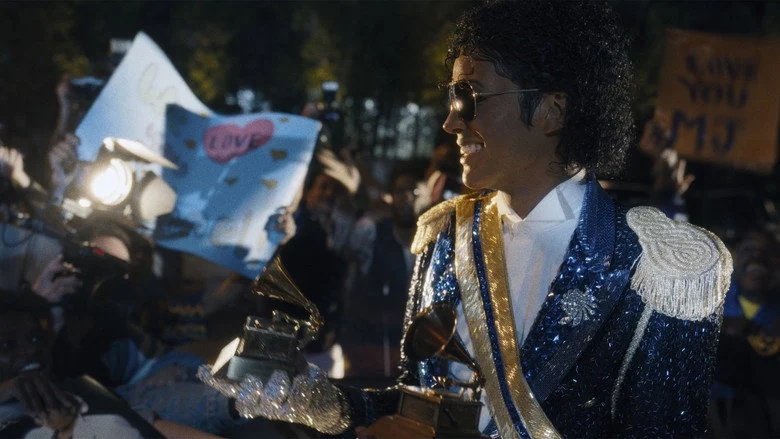
Jaafar Jackson’s casting works not because he disappears into the role, family resemblance is unavoidable, but because he permits the film to treat physical verisimilitude as foundation rather than performance finish. He must anchor both the Jackson 5 ensemble sequences where youth defines the group’s appeal and the solo performance sections where Michael’s frame becomes the entire stage architecture. The role demands he sustain recognizable iconography across decades of career compression without inventing false interiority the screenplay hasn’t earned.
**Fuqua’s Chronological Architecture Avoids Complexity**
Fuqua organizes Michael Jackson’s early career into a legible, forward-moving trajectory: family formation, Motown discovery, group success, solo ascent. This structure is clarifying but also evasive. The screenplay, by John Logan, prioritizes momentum through career landmarks over psychological deepening, which means scenes involving Joseph Jackson’s paternal pressure function as plot mechanism rather than as genuine fracture points. The film’s greatest weakness is its decision to stop before the narrative weight becomes unbearable, a choice that reads less as artistic restraint and more as industrial caution.
**Performance Recreations Replace Interior Conflict**
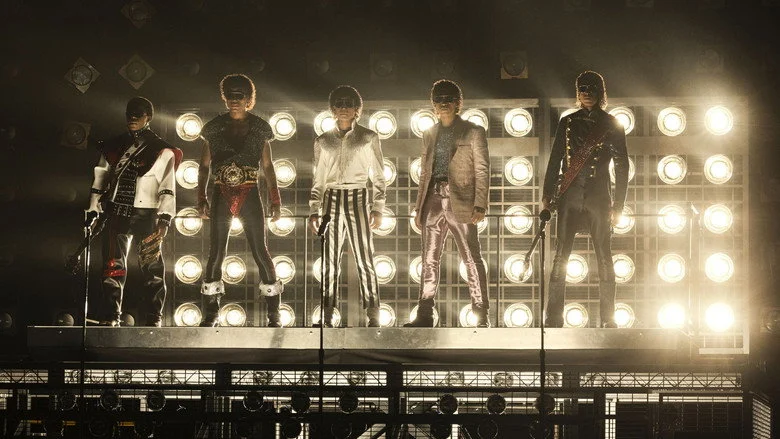
The Jackson 5 launch material tied to Motown’s discovery machinery provides the film’s clearest dramatic spine. These sequences do what music biopics do best: they render verifiable history into stage language, letting concert footage and recognizable setlists serve as biographical evidence. The early solo performance recreations follow the same logic, they anchor the film in Jackson’s public archive rather than in invented domestic dialogue.
Yet this reliance on performance spectacle as narrative substitute becomes limiting. When Colman Domingo’s Joseph Jackson appears, he functions as pressure source rather than as a character whose contradictions the film genuinely interrogates. The father-son conflict remains surface-level: Joseph demands, Michael resists, the industry extracts. There is no moment where the film permits ambiguity about how Michael internalized or rejected this pressure, or how his own perfectionism may have originated in sources other than paternal force.
The supporting ensemble, Nia Long as Katherine Jackson, Miles Teller as attorney John Branca, Laura Harrier as Motown executive Suzanne de Passe, exists primarily to anchor different sectors of the narrative machinery. Each actor is deployed where the script requires representation: family stability, legal navigation, industry infrastructure. They are functional rather than substantial.
If you’re drawn to music biopics that celebrate performance reconstruction and career-arc clarity, this film delivers those satisfactions. For viewers expecting Antoine Fuqua to excavate psychological complexity or genuine contradiction in Jackson’s rise, the compressed chronology and cautious handling of contested material will feel evasive. Watch it in a theater where the stage recreations command the screen’s full reach; the home viewing experience will diminish what craft precision Fuqua has managed.
Broader examination of performance-driven biography reveals patterns worth understanding. English Biography reviews increasingly prioritize public record and spectacle reconstruction over psychological risk.
*Michael* is a competent career chronology that chooses safety over interrogation, offering 3 out of 5 stars as a handsomely executed if ultimately circumscribed tribute to early stardom.
Fuqua’s methodical staging echoes the visual discipline found in Star Wars review, where recognizable iconography substitutes for interior development.
The film’s restraint in addressing complexity mirrors how Karuppu verdict when narrative scope becomes too narrow.

Ankit Jaiswal is the Chief Author, covering Indian cinema and OTT releases with honest, no-filler criticism. An SEO strategist by background, he brings a research-driven approach to film writing, cutting through hype to tell you exactly what's worth your time.