

Ugly Story (2026): A Disturbing Telugu Psychological Drama That Refuses To Look Away



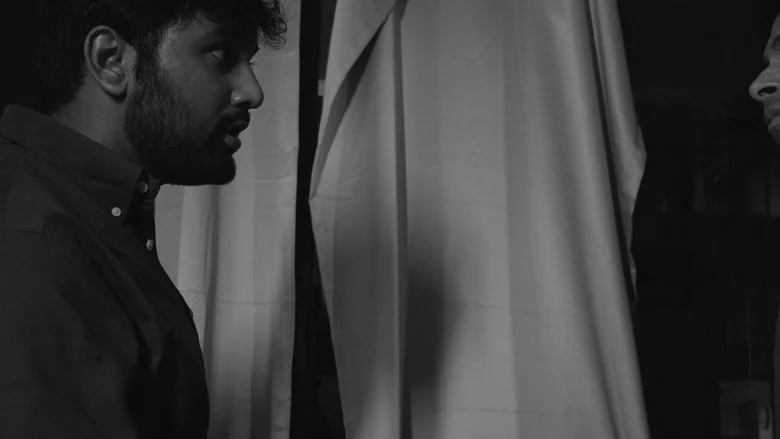
The climax of *Ugly Story* lands like a punch to the gut, a confrontation where the psychological strain between Karthik and Neha finally snaps into something raw and unpredictable. It is the film’s most effective moment, a payoff that rewards patience even when the journey there feels deliberately uncomfortable. This is not a film that wants to be liked; it wants to be endured.

Nandu Vijay Krishna and Avika Gor Carry the Emotional Weight of a Fractured Marriage
Nandu Vijay Krishna anchors the film as Karthik, a man whose emotional strain becomes the story’s central engine. His scenes of escalating confrontation with Neha carry a tension that compensates for the screenplay’s structural wobbles. He makes the character’s descent feel earned, not theatrical.
Avika Gor matches him beat for beat as Neha, a woman whose trauma, losing her parents and living under her uncle’s care, shapes her fragility. Her portrayal of suffering is unflinching, and the discomfort it generates is precisely the point. Together, they create a dynamic that is painful to watch yet impossible to ignore.
Director L. Pranava Swaroop’s Bold Vision Is Undermined by Uneven Execution
L. Pranava Swaroop deserves credit for refusing to soften a difficult subject. The film’s commitment to exploring obsession and psychosis is admirable, but the execution wavers between intense and exhausting. The pacing in the first half, which establishes the relationship setup, drags in places where sharper editing could have tightened the grip.
The screenplay is linear, which suits the material, but its tonal consistency is shaky. Moments of genuine psychological dread are sometimes diluted by stretches that feel repetitive. Swaroop’s strength is his willingness to sit in discomfort; his weakness is not knowing when to pull back.
Genre-Core Execution: A Drama That Uses Tension as Its Only Thrill
As a psychological drama, *Ugly Story* relies on internal conflict rather than spectacle. The suspense is generated entirely through relationship tension and emotional pressure, with the early backstory of Neha’s parents’ death setting a somber tone. There are no action beats here, only the slow, creeping realization that these characters are trapped in their own minds.
The secondary thriller element is subtle, almost recessive. The film’s “thrill” comes from unpredictability in character behavior rather than plot twists, which will frustrate viewers expecting a conventional genre ride. The discomfort of the psychosis-focused portions is a feature, not a bug, but it severely limits the film’s commercial appeal.
The climax sequence is where the genre craft finally coalesces. Reviews consistently single it out as the film’s strongest payoff, a moment where the buildup of mental strain erupts into confrontation. It is a reminder of what this film could have been if the entire runtime had matched that intensity.
For those who appreciate Telugu cinema that experiments with heavy emotional themes, there is more to explore in our Telugu Thriller reviews.
Supporting Cast Provides Structure, But Little Else
Shivaji Raja, as Neha’s uncle, grounds the early narrative with a paternal presence that explains her vulnerability. His role is functional rather than flashy, but it gives Avika Gor’s backstory the necessary weight. Pragya Nayan Sinha’s police officer suggests a procedural angle that the film never fully develops, leaving her performance underutilized in the available narrative.
Ravi Teja Mahadasyam, listed as Goutham, remains an unclear figure in the cast dynamics. His potential antagonist function is not isolated as a standout in any review, which suggests the character’s threat is more ambient than active. The film’s focus remains squarely on the central couple, leaving the periphery thin.
Audience Reception and The Box Office Reality: A Divide Between Critics and Viewers
The film’s commercial performance tells a story of its own. Filmibeat reported an opening day India net of ₹1.74 Cr, a figure that ultimately led trade coverage to declare the film a disaster. The uncomfortable subject matter clearly did not translate into wide theatrical appeal, even as Cinema Express noted that *Ugly Story* “attempts to explore a bold and psychologically intense subject.”
Times of India echoed that sentiment, stating the film is “undoubtedly committed to its premise and unafraid of difficult emotions.” Yet ABP Desam’s assessment cuts to the chase: “It is difficult for Ugly Story to please all audiences.” The gap between critical appreciation for the attempt and audience rejection of the experience is the film’s defining trait.
Interestingly, the IMDb rating sits at a healthier 7.0, suggesting that the niche audience who seek out this material respond to it far more favorably than the general public. This is a film for a specific palate, not a mass one.
There is no controversy attached to the film, no political firestorm or censorship battle. Instead, the debate is purely aesthetic: is the film’s unrelenting misery a strength or a liability? For those who find the psychosis portions difficult, it is a liability; for those who value the emotional intensity, it is the only reason to watch.
My own take is that *Ugly Story* is a film you respect more than you enjoy. It is a performance-driven exercise in psychological distress that succeeds on the strength of its leads but falters in its pacing and tonal consistency. The opening day collection of ₹1.74 Cr, as per Filmibeat, reflects a market that was not ready for this level of discomfort.
If you are drawn to difficult emotional material and appreciate actors willing to go to dark places, this is worth a watch on OTT, where the intimacy of the performances translates better than in a noisy theater. If you want entertainment, look elsewhere, this is a study in suffering, not a escape from it.
*Ugly Story* is a brave, flawed experiment that will alienate as many viewers as it captivates, a 3/5 for its daring performances and powerful climax, docked for a screenplay that never quite matches its ambition.
For a similar dive into performance-led Telugu storytelling, consider Athiradi review.

Ankit Jaiswal is the Chief Author, covering Indian cinema and OTT releases with honest, no-filler criticism. An SEO strategist by background, he brings a research-driven approach to film writing, cutting through hype to tell you exactly what's worth your time.